Educational information, not medical advice. Drafted with AI from the sources cited and reviewed before publishing. How we work.
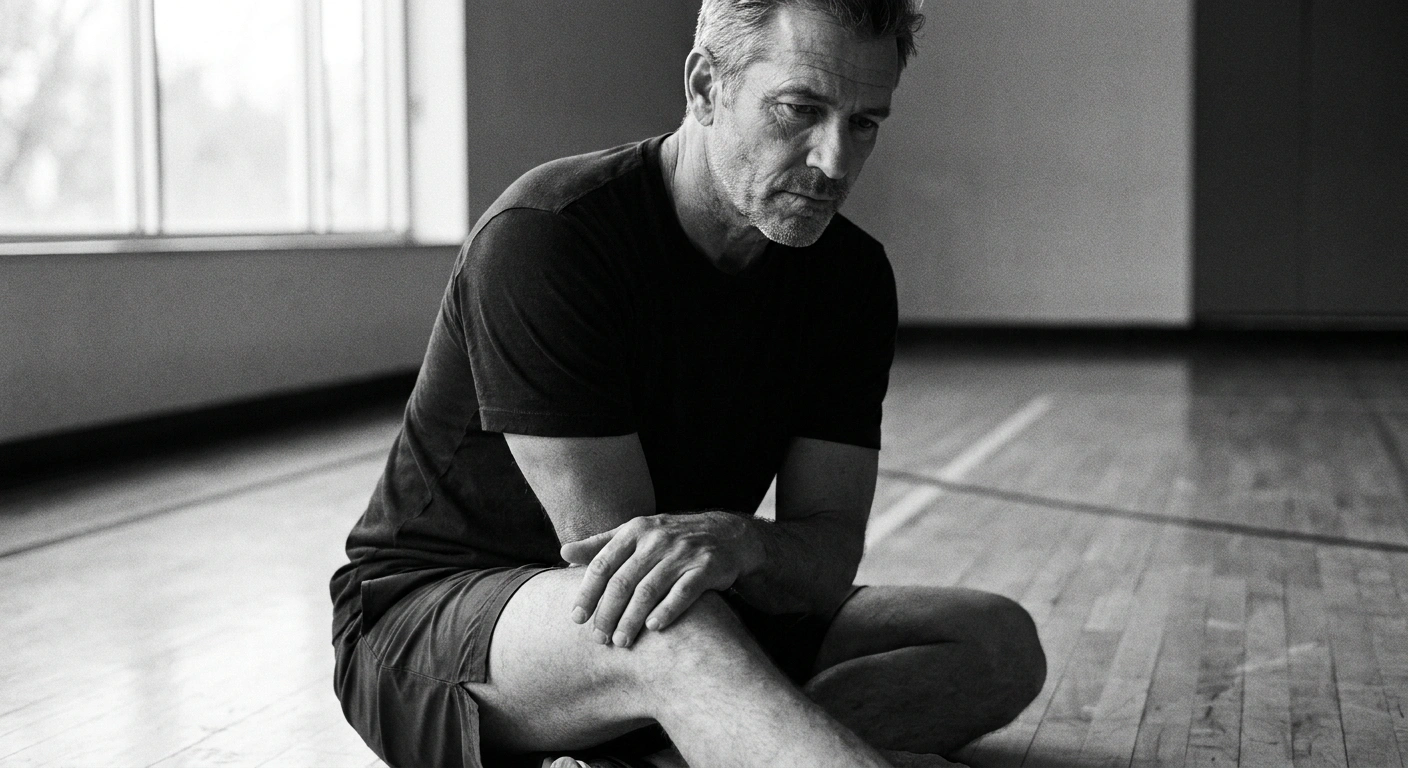
Hip flexion range of motion drops roughly 6 degrees per decade after 40. For most men, that translates to tighter hips after long car rides, lower back stiffness on Monday mornings, and squats that feel nothing like they did at 30. The American College of Sports Medicine recommends flexibility and mobility training at least 2 to 3 days per week for adults over 50, yet most men skip it in favor of more lifting.
These 10 exercises target the movement restrictions that affect men over 50 most: hip flexors shortened by years of desk work, thoracic spine stiffened by forward-head posture, and ankles restricted by decades of conventional footwear. Each exercise takes under two minutes. The full routine runs about 15 minutes.
This is not a static stretching session. Mobility work trains your nervous system to access and control range of motion, not just temporarily lengthen a muscle. A man with good mobility can get himself into a deep squat position and control it. That is the goal.
Who this is for: Men over 50 dealing with stiff hips, tight lower backs, or restricted shoulders — and men who want to stay ahead of those changes before they arrive.
Key takeaways:
- Hip flexion declines approximately 6 degrees per decade without intervention
- 15 minutes of mobility work 3 days per week meets ACSM guidelines for older adults
- These 10 exercises cover the 5 joints most restricted in men over 50: hips, thoracic spine, ankles, shoulders, and lumbar spine
- Reduced lower-extremity flexibility correlates with higher fall risk in older men
Why Mobility Declines Faster After 50
Sitting 8 or more hours per day compresses the hip flexors and rotators into shortened positions. The thoracic spine stiffens from years of forward-head posture in front of screens. Ankle dorsiflexion decreases from shoe heel elevation. None of these changes are inevitable, but all of them accelerate without active work.
A 2012 systematic review in the Journal of Aging Research analyzed 16 studies and found that flexibility declines with age but improves in older adults who perform regular stretching and mobility training. Men show faster flexibility loss than women overall, with hip extension and shoulder internal rotation showing the steepest declines.
Falls send 3 million Americans to emergency departments each year. Hip mobility and dynamic balance are linked: men with reduced lower-extremity flexibility carry higher fall risk, and regular flexibility training is one of the few interventions with consistent evidence for fall prevention in older adults. The case for a mobility practice is not cosmetic — it is structural.
1. World's Greatest Stretch
Targets: Hip flexors, thoracic spine, hamstrings, groin
One movement sequence covers three common mobility restrictions at once: tight hip flexors, restricted thoracic rotation, and stiff hamstrings. This earns its name.
How to do it:
- Start in a push-up position, hands under shoulders
- Step your right foot outside your right hand, landing in a deep lunge
- Drop your right elbow toward the floor, aiming to touch the ground inside your front foot
- Rotate your right arm toward the ceiling, eyes tracking your hand
- Return the hand to the floor, then extend your front leg to feel a hamstring stretch
- Return to the start and repeat on the left side
Sets/reps: 5 slow repetitions per side
Spend two full seconds at the end range of each position. Fast repetitions miss the point. The thoracic rotation component matters most for desk workers whose mid-back has lost rotation in both directions.
2. Hip 90/90 Stretch
Targets: Hip internal rotation, hip external rotation
Most men's hip mobility work focuses only on the flexors. The 90/90 stretch addresses hip internal and external rotation, which is where the most significant deficits develop in men who sit for the majority of the day.
How to do it:
- Sit on the floor with one leg at 90° in front and the other at 90° to the side
- Sit upright, keeping your torso tall — resist leaning away from the front leg
- Hold for 30 to 45 seconds, then lean forward over your front shin to deepen the stretch
- Switch sides
Sets/reps: 2 sets of 45 seconds per side
Both sides rarely feel symmetric. Work the tighter side first. If you cannot sit with both sitting bones on the floor, place a folded blanket under the raised hip and work toward sitting flat over several weeks.
3. Thoracic Rotation
Targets: Mid-back rotation, rib cage mobility
The thoracic spine (T1 to T12) provides 35 to 50 degrees of rotation in each direction when healthy. In most sedentary men over 50, available T-spine rotation drops closer to 20 to 25 degrees. That deficit forces the lower back and neck to compensate on every rotation movement, which is a direct contributor to lumbar pain and cervical stiffness.
How to do it:
- Sit on the edge of a firm chair or kneel upright on the floor
- Place one hand behind your head, elbow pointing out to the side
- Rotate your upper body, leading with the elbow, as far as you can without moving your hips
- Hold for two seconds at the end of the range
- Return and repeat
Sets/reps: 10 slow repetitions per side
Keep your eyes tracking with the elbow. This cue keeps the rotation happening in the thoracic spine rather than the neck. If you feel the movement in your lower back, slow down and focus on initiating the rotation from behind your shoulder blades.
4. Deep Squat Hold
Targets: Hip flexors, hip rotators, ankles, lumbar spine
The deep squat is both a diagnostic test and a mobility exercise. If you cannot hold a full squat for 30 seconds with heels on the floor and torso upright, you have simultaneous restrictions in your hips, ankles, or both. This is normal for most men over 50 who have not trained this position. It reverses with practice.
How to do it:
- Stand with feet shoulder-width apart, toes turned out 15 to 30 degrees
- Squat as low as you can go while keeping your heels on the floor
- Use a doorframe or TRX strap for assistance if needed
- Hold the position, aiming to increase your time each session
Sets/reps: 3 holds of 30 to 60 seconds
Use assistance to access range you cannot yet control independently. Most men find their ankles limit them before their hips do. Pairing this with the ankle dorsiflexion exercise below accelerates progress on both restrictions at once.
5. Couch Stretch (Hip Flexors)
Targets: Iliopsoas, rectus femoris, hip flexor complex
The iliopsoas is the primary hip flexor. In men who sit for most of the day, it shortens and holds the pelvis in anterior tilt, which increases lumbar lordosis and generates chronic lower back tension. The couch stretch provides a direct stretch in a position that most kneeling hip flexor variations miss. If you have persistent lower back pain, read our guide to lower back pain exercises for men over 40 alongside this routine.
How to do it:
- Kneel in front of a couch or low chair
- Place your back shin against the seat pad, knee on the floor
- Step your front foot forward into a lunge position
- Drive your hips forward and down while keeping your torso upright
- Squeeze the glute of the back leg — this deepens the hip flexor stretch
Sets/reps: 2 sets of 45 seconds per side
If this is too intense at first, use a standard kneeling hip flexor lunge on the floor without the elevated shin. Graduate to the full couch stretch as flexibility improves over 2 to 3 weeks.
6. Ankle Dorsiflexion Mobilization
Targets: Ankle joint, Achilles tendon, calf complex
Restricted ankle dorsiflexion forces the knee to shift inward during squats and the heel to lift during lunges. Both compensations increase injury risk at the knee and lower back. A healthy ankle allows the knee to travel at least 4 inches past the toes with the heel flat on the floor. Most men over 50 test at 2 to 3 inches.
How to do it:
- Stand facing a wall, about 5 inches away, with one foot forward
- Drive your front knee over your little toe, aiming to touch the wall
- Keep your heel on the floor throughout the movement
- If your knee reaches the wall easily, move your foot back 1 inch and repeat
- Find the farthest distance from the wall where your knee still touches with your heel down
Sets/reps: 3 sets of 10 slow repetitions per side
Track your distance from the wall. Improvement shows up within 4 to 6 weeks of consistent daily work. This exercise pairs with the deep squat hold — men who address ankle restriction first often find squat depth follows without additional work.
7. Cat-Cow
Targets: Lumbar spine flexion and extension, thoracic spine
Cat-cow appears in every yoga class and physical therapy program because it works. The exercise cycles the lumbar and thoracic spine through its full natural range of flexion and extension, which is the specific movement pattern that chronic lower back stiffness eliminates first. Pair this with the daily stretching routine for men over 40 for a comprehensive lower back approach.
How to do it:
- Start on all fours, wrists under shoulders, knees under hips
- On an inhale, let your belly drop toward the floor, lift your head and tailbone (cow)
- On an exhale, round your spine toward the ceiling, tuck your chin and pelvis (cat)
- Move with control and breathe into the end range of each position
Sets/reps: 10 to 15 slow cycles
Treat each repetition as a deliberate end-range exploration, not a rhythmic bounce. Spend one full breath at the top and bottom of each cycle. This is an appropriate warm-up for any lower body or back training session.
8. Leg Swings
Targets: Hip flexors, hip extensors, hip abductors (dynamic control)
Static stretching improves passive range of motion. Leg swings develop active control within that range, which is what you need for walking, running, and stair climbing. Dynamic hip mobility translates to gait efficiency and reduces the "shuffling" stride pattern that develops as hip extension declines with age.
How to do it:
Forward and backward:
- Stand beside a wall, one hand touching for balance
- Swing your outer leg forward and backward in a controlled arc
- Build range over 10 swings — never force the end range
Side to side:
- Face the wall, both hands on the wall for balance
- Swing one leg out to the side and across your body in a controlled arc
- Keep your torso still — only the leg moves
Sets/reps: 15 swings per direction, per side
Control the swing. Maximum height is not the goal — maximum control at the end range is. Increase range as you warm up over 10 to 15 repetitions.
9. Wall Slides
Targets: Shoulder mobility, thoracic extension, scapular control
Rounded upper back posture restricts the shoulders from reaching full overhead range without impingement. Wall slides train shoulder elevation and thoracic extension in one movement. This combination targets what most mobility programs overlook: getting the upper back to extend so the shoulder joint can clear.
How to do it:
- Stand with your back flat against a wall, feet 2 to 3 inches away
- Press the back of your head, upper back, and forearms against the wall
- Arms start at 90 degrees, elbows bent
- Slide your arms overhead while keeping all contact points on the wall
- Return to the start position
Sets/reps: 3 sets of 10 repetitions
This is harder than it looks. If you cannot keep your lower back or wrists against the wall, work within the range you can control and build range over several weeks. Men who sit at desks find this reveals more restriction than expected.
10. Figure-Four Stretch (Piriformis)
Targets: Piriformis, hip external rotators, deep gluteals
The piriformis and surrounding hip external rotators compress against the sciatic nerve when tight. This is a frequent contributor to the chronic gluteal tightness and leg discomfort that many men over 50 mistake for sciatica. The figure-four stretch hits that muscle group.
How to do it:
- Lie on your back, knees bent, feet flat on the floor
- Cross your right ankle over your left knee, flexing your right foot
- Reach through with both hands and pull your left thigh toward your chest
- Hold until you feel a stretch in the right glute and outer hip
- Hold and switch sides
Sets/reps: 2 sets of 45 seconds per side
A firmer pull on the thigh increases stretch intensity. If you prefer a seated version: cross your ankle over the opposite knee while sitting in a chair and lean forward with a flat back. The seated version is often more accessible for men with limited floor mobility.
How to Structure Your Routine
Three sessions per week meets the ACSM minimum for maintaining functional range of motion after 50. Spread them across non-consecutive days.
| Day | Timing | Duration |
|---|---|---|
| Monday | Morning or before work | 12–15 min |
| Wednesday | After your strength workout | 10 min |
| Friday | Evening | 12–15 min |
Run the 10 exercises in the sequence listed. The sequence puts floor work first, standing exercises next, then wall work. This minimizes position changes and keeps the session flowing.
If 15 minutes is not realistic on some days, cut to 5 exercises and prioritize what your assessment shows you need most. Men with hip restrictions should focus on exercises 2, 4, 5, and 8. Men with upper back stiffness should prioritize 1, 3, and 9.
Pair this routine with the full body workout program for men over 50 as a warm-up block, or run it as a standalone morning session. Both approaches work. See our guide to low-impact exercises for men with bad knees if knee discomfort is limiting your deep squat or lunge work.
Assess Your Mobility
Mobility Self-Assessment
How's Your Mobility?
Answer 5 questions to see where your mobility stands and which exercises to prioritize first.
Question 1 of 5
Can you hold a full squat (thighs below parallel) with heels flat on the floor for 30 seconds?
Frequently Asked Questions
How long before men over 50 see improvement in mobility?
Most men notice changes within 3 to 4 weeks of consistent training at 3 sessions per week. Hip flexion and thoracic rotation tend to improve fastest. Ankle dorsiflexion takes 6 to 8 weeks to show meaningful change because it requires adaptation in the Achilles tendon and surrounding connective tissue, not just muscle lengthening.
Should mobility work come before or after strength training?
Use 5 minutes of dynamic mobility work (leg swings, cat-cow, thoracic rotations) before lifting as part of your warm-up. Save the deeper static holds — 90/90, couch stretch, figure-four — for after your workout when connective tissue is warm and responds better. This approach also supports muscle recovery for men over 40.
Is mobility training the same as flexibility training?
No. Flexibility is passive range of motion — how far a joint can move when an external force is applied. Mobility is active range of motion under your own muscular control. A man with good flexibility can be lowered into a deep squat. A man with good mobility can get there himself and hold it. The exercises in this guide develop mobility, not just flexibility.
Can mobility training reduce lower back pain?
Yes, in most cases. Tight hip flexors and restricted thoracic rotation are direct contributors to lumbar overload. Addressing these through the exercises above (the couch stretch, thoracic rotation, and cat-cow in particular) reduces the compensation patterns that generate chronic lower back tension. Persistent or acute back pain warrants medical evaluation before beginning any new exercise program.
What causes sudden mobility loss in men over 50?
Sudden or significant loss of mobility in a single joint, or on one side only, warrants medical evaluation. Common causes include hip osteoarthritis, lumbar disc herniation, and early shoulder impingement. Mobility work is appropriate for age-related stiffness but is not a substitute for diagnosing structural joint problems.
How many days per week should men over 50 do mobility work?
The ACSM recommends 2 to 3 days per week as the minimum for maintaining functional range of motion in older adults. Daily work produces faster progress and is appropriate if intensity is moderate. There is no upper limit as long as the training does not produce joint pain.
The Bottom Line
Hip flexion drops roughly 6 degrees per decade. Thoracic rotation narrows. Ankle dorsiflexion tightens. These are predictable changes, and they respond to deliberate work. The 10 exercises in this guide cover the movement patterns that matter most for men over 50: hip rotation, hip flexion and extension, T-spine rotation, ankle dorsiflexion, and shoulder elevation.
Fifteen minutes, three days a week. That is the dose. The return is a body that moves without restriction, lifts without compensation, and ages without the premature stiffness that sidelines most men in their 50s before it needs to.
Consult your healthcare provider before starting any new exercise program, especially if you have existing joint conditions, a history of orthopedic surgery, or cardiovascular disease.
References
The sources this article links to, in the order they appear.
Keep reading
More from Fitness for men over 40.
Medical Disclaimer: This article is for informational purposes only and does not constitute medical advice. Always consult your healthcare provider before starting any new exercise, nutrition, or supplement program. Written and reviewed by The PrimeVital Desk.