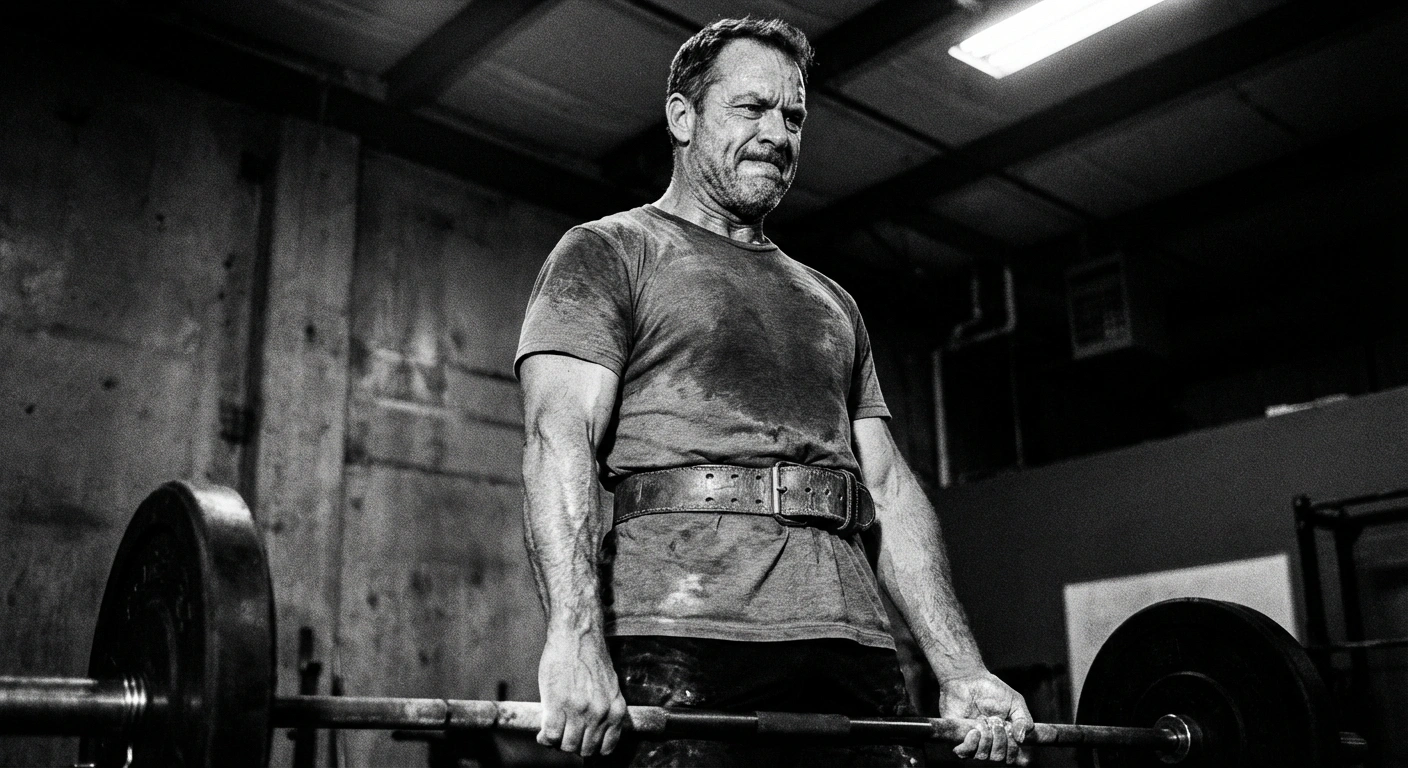
If you've hit 40 and want to know how to build muscle after 40 naturally, here's the good news: your body is still fully capable of significant muscle growth. The process is different than it was at 25, but with the right training, nutrition, and recovery strategy, men in their 40s and 50s can build meaningful muscle mass without drugs, gimmicks, or extreme measures.
This isn't about chasing your 20-year-old physique. It's about building a stronger, more resilient body that serves you for the next 40 years.
Why Building Muscle After 40 Is Different (But Not Impossible)
Your body changes after 40. Understanding these changes is the first step to working with your biology instead of against it.
Sarcopenia: The Muscle Loss You Need to Fight
Starting around age 30, men lose roughly 3-8% of muscle mass per decade, a process called sarcopenia. After 40, this rate accelerates. A landmark study published in Current Opinion in Clinical Nutrition and Metabolic Care found that men lose an average of 1-2% of lean muscle mass per year after age 50 if they remain sedentary.
But sarcopenia is not inevitable. Research from the Journal of the American Geriatrics Society demonstrated that resistance training can reverse age-related muscle loss at any age. In one study, men aged 60-72 increased muscle strength by 174% and muscle size by 9% after just 12 weeks of progressive resistance training.
If those results are possible at 60, imagine what's achievable at 40.
Hormonal Shifts
Testosterone levels decline by approximately 1-2% per year after age 30, according to data from the National Institutes of Health. By 45, some men may have total testosterone levels 20-30% lower than their peak. Lower testosterone doesn't prevent muscle growth, but it does mean you need to be more strategic about your approach.
The good news: compound resistance exercises naturally boost testosterone production. A study in the European Journal of Applied Physiology showed that heavy compound lifts (squats, deadlifts, rows) produced significant acute increases in testosterone and growth hormone, even in men over 40.
If you're experiencing symptoms beyond normal aging — persistent fatigue, significant strength loss, or mood changes — it's worth getting your levels checked. Read more about the signs of low testosterone in men over 40.
Recovery Capacity
Here's where age makes the biggest practical difference. Your recovery capacity declines because of reduced production of growth hormone, slower protein synthesis rates, and accumulated wear on connective tissue. A 2019 study in Experimental Gerontology found that men over 40 required approximately 48-72 hours of recovery between sessions targeting the same muscle groups, compared to 24-48 hours for younger trainees.
This isn't a limitation — it's information you can use to design a smarter program.
The 5 Pillars of Natural Muscle Building After 40
1. Progressive Overload (Done Right)
Progressive overload — gradually increasing the demands on your muscles — remains the single most important principle for muscle growth at any age. A 2017 meta-analysis in the Journal of Strength and Conditioning Research confirmed that progressive overload is the primary driver of hypertrophy regardless of age.
After 40, apply progressive overload through these methods:
- Add weight gradually: Increase loads by 2.5-5 lbs (1-2.5 kg) when you can complete all prescribed reps with good form
- Add reps before adding weight: If your target is 3x8, work up to 3x10 before increasing the load
- Increase time under tension: Slow your eccentric (lowering) phase to 3-4 seconds
- Improve range of motion: A deeper squat or fuller stretch at the bottom of a row recruits more muscle fibers
What to avoid: ego lifting, jumping weight too quickly, and pushing through joint pain. At 40+, an injury that sidelines you for 8 weeks costs more than a month of conservative progression gains.
2. Optimal Training Volume and Frequency
Research published in Sports Medicine (2016) established that training each muscle group twice per week produces superior hypertrophy compared to once-weekly training. For men over 40, the sweet spot is:
- Frequency: Each muscle group 2x per week
- Volume: 10-20 working sets per muscle group per week
- Intensity: 65-85% of your one-rep max (or RPE 7-9)
- Rep ranges: Mix of 6-8 (strength), 8-12 (hypertrophy), and 12-15 (endurance/joint health)
A 3-4 day per week program works best for most men over 40, leaving adequate recovery days. For a complete beginner-friendly approach, check out our beginner strength training program for men over 40.
3. Nutrition for Muscle Growth
You cannot out-train a poor diet, especially after 40. Muscle protein synthesis rates decline with age, which means your nutrition strategy needs to be more precise.
Protein: The Non-Negotiable
The American College of Sports Medicine recommends 1.2-2.0 grams of protein per kilogram of body weight per day for adults engaged in resistance training. For men over 40, aim for the higher end of this range.
A 2015 study in The American Journal of Clinical Nutrition found that older adults require approximately 0.4 grams of protein per kilogram of body weight per meal to maximally stimulate muscle protein synthesis — about 30-40 grams of protein per meal for most men.
Practical protein targets (for a 180 lb / 82 kg man):
- Daily total: 130-160 grams
- Per meal (4 meals): 33-40 grams
- Post-workout: 30-40 grams within 2 hours of training
Key protein sources: lean meats, fish, eggs, Greek yogurt (Greek-style yoghurt in the UK), whey protein, and legumes. For a complete nutrition framework, see our high-protein diet plan for men over 40.
Calories: Slight Surplus, Not a Bulk
Forget the "dirty bulk" approach of your 20s. Men over 40 partition calories less efficiently, meaning excess calories are more likely to become fat rather than muscle. Aim for a modest caloric surplus of 200-300 calories above your maintenance level. This supports muscle growth while minimizing fat gain.
If you don't know your maintenance calories, multiply your body weight in pounds by 14-15 as a starting estimate. Track your weight weekly — you should gain approximately 0.5-1 lb (0.25-0.5 kg) per month. Faster than that, and you're likely adding unnecessary fat.
Micronutrients That Matter
Several nutrients become increasingly important for muscle health after 40:
- Vitamin D: Supports testosterone production and muscle function. Aim for 2,000-4,000 IU daily, especially if you live in northern latitudes. A study in The Journal of Clinical Endocrinology & Metabolism linked vitamin D deficiency to accelerated muscle loss in men over 40.
- Magnesium: Involved in over 300 enzymatic reactions including muscle contraction and protein synthesis. Target 400-420 mg daily.
- Omega-3 fatty acids: A 2020 study in The American Journal of Clinical Nutrition found that omega-3 supplementation enhanced muscle protein synthesis in older adults. Aim for 2-3 grams of combined EPA and DHA daily.
- Creatine monohydrate: One of the most studied and effective natural supplements. Research in The Journal of the International Society of Sports Nutrition consistently shows that creatine (3-5 grams daily) improves strength, muscle mass, and recovery — with benefits that may be even more pronounced in older adults.
4. Recovery: Your Secret Weapon
After 40, recovery isn't just rest between sets — it's a deliberate practice that determines whether you grow or break down.
Sleep
A study published in JAMA Internal Medicine found that men who slept less than 6 hours per night had significantly lower testosterone levels and impaired muscle protein synthesis. Aim for 7-9 hours of quality sleep. If you're training hard and sleeping poorly, you're spinning your wheels.
Sleep optimization checklist:
- Consistent sleep and wake times (even on weekends)
- Cool bedroom (65-68°F / 18-20°C)
- No screens 60 minutes before bed
- Limit caffeine after 2 PM
- Consider magnesium glycinate (200-400 mg) before bed
Active Recovery
On rest days, don't just sit on the couch. Light activity promotes blood flow, reduces muscle stiffness, and accelerates recovery:
- 20-30 minutes of walking
- Light swimming or cycling
- Gentle yoga or stretching
- Foam rolling (especially for tight hips and thoracic spine)
Including zone 2 cardio on your rest days supports both cardiovascular health and recovery without interfering with muscle growth.
Stress Management
Chronic stress elevates cortisol, which directly impairs muscle protein synthesis and promotes muscle breakdown. A 2014 study in Psychoneuroendocrinology demonstrated that men with chronically elevated cortisol gained significantly less muscle from resistance training compared to those with normal stress levels.
Find what works for you — meditation, time outdoors, hobbies, social connection — and treat it as part of your training program.
5. Joint Health and Injury Prevention
Nothing kills muscle-building progress faster than a preventable injury. After 40, your tendons and ligaments need more attention than your muscles.
Warm Up Properly
Spend 10-15 minutes warming up before every session:
- 5 minutes of light cardio (bike, rowing machine, brisk walk)
- Dynamic stretches: leg swings, arm circles, hip circles
- 2-3 warm-up sets of your first exercise, gradually increasing weight
Smart Exercise Selection
Some exercises carry more risk than reward after 40. Consider these swaps:
| Higher Risk | Lower-Risk Alternative |
|---|---|
| Barbell bench press (flat) | Incline dumbbell press |
| Behind-the-neck press | Standing dumbbell overhead press |
| Barbell upright rows | Dumbbell lateral raises |
| Heavy barbell shrugs | Farmer's walks |
| Leg extensions (heavy) | Bulgarian split squats |
This doesn't mean you can never do these movements. It means listen to your body. If something causes joint pain (not muscle fatigue), swap it out.
For more on protecting your joints during training, see our guide on the best joint supplements for men over 50 — many of the recommendations apply from age 40 onward.
A Sample Weekly Training Plan
Here's a practical 4-day program optimized for natural muscle building after 40:
Day 1: Upper Body A
- Incline dumbbell bench press: 4x8 (3-second lowering phase)
- Barbell or cable rows: 4x8
- Standing overhead press: 3x10
- Chin-ups or lat pulldowns: 3x10
- Face pulls: 3x15
- Dumbbell curls: 2x12
Day 2: Lower Body A
- Barbell back squat or goblet squat: 4x8
- Romanian deadlifts: 3x10
- Bulgarian split squats: 3x10 each leg
- Leg curls: 3x12
- Standing calf raises: 3x15
- Plank holds: 3x30-45 seconds
Day 3: Rest or Active Recovery
Walk, swim, light cycling, yoga, or foam rolling. Keep it low intensity.
Day 4: Upper Body B
- Flat dumbbell bench press: 4x10
- Single-arm dumbbell rows: 4x10
- Dumbbell lateral raises: 3x12
- Cable face pulls: 3x15
- Tricep pushdowns: 3x12
- Hammer curls: 2x12
Day 5: Lower Body B
- Trap bar deadlifts or conventional deadlifts: 4x6
- Leg press: 3x12
- Walking lunges: 3x10 each leg
- Glute-ham raises or back extensions: 3x12
- Seated calf raises: 3x15
- Pallof press: 3x10 each side
Days 6-7: Rest or Active Recovery
Progression protocol: When you can complete all prescribed sets and reps with 1-2 reps left in reserve, increase the weight by 2.5-5 lbs (1-2.5 kg) at the next session.
For a deeper dive into programming for men over 40, read our comprehensive strength training guide.
Common Mistakes Men Over 40 Make
Training Too Hard, Too Often
More is not better. A 2019 study in Medicine and Science in Sports and Exercise found that exceeding 20 sets per muscle group per week provided no additional hypertrophy benefit and increased injury risk — especially in older populations.
Ignoring Compound Movements
Machines have their place, but compound free-weight exercises (squats, deadlifts, presses, rows) recruit more muscle fibers, stimulate more hormonal response, and build functional strength. Make them the backbone of your program.
Skipping Protein at Breakfast
Research in the Journal of Nutrition shows that evenly distributing protein across meals (rather than loading it at dinner) maximizes daily muscle protein synthesis. Start your day with 30-40 grams of protein.
Neglecting Mobility Work
Tight hips, rounded shoulders, and stiff thoracic spines are epidemic in men over 40 — largely due to desk jobs. Spend 10 minutes daily on mobility work. Your squat depth, overhead press, and lower back will thank you.
Expecting Linear Progress
Muscle growth after 40 is slower than at 25. Expect to gain 0.5-1 lb of lean muscle per month with consistent training and nutrition. That adds up to 6-12 lbs of muscle per year — a genuinely transformative amount. Be patient.
Frequently Asked Questions
Can you really build muscle after 40 without steroids?
Absolutely. A study published in The Journals of Gerontology demonstrated that men aged 40-60 who followed a structured resistance training program gained an average of 2.4 kg (5.3 lbs) of lean muscle mass over 16 weeks without any pharmacological intervention. Natural muscle building after 40 requires consistency with training, adequate protein intake (1.6-2.0 g/kg/day), sufficient sleep, and progressive overload. You won't gain as fast as a 20-year-old, but the results are real and sustainable.
How many days a week should a man over 40 lift weights?
Three to four days per week is optimal for most men over 40. This frequency allows you to train each muscle group twice weekly while providing adequate recovery time. A study in Sports Medicine confirmed that twice-weekly training per muscle group is superior to once-weekly for hypertrophy. Going beyond four lifting days often leads to accumulated fatigue and increased injury risk without additional muscle-building benefit.
What role does testosterone play in building muscle after 40?
Testosterone supports muscle protein synthesis, but natural age-related decline (1-2% per year) does not prevent muscle growth. Research from Harvard Health indicates that most men over 40 still have testosterone levels sufficient for muscle development. Compound exercises, adequate sleep, vitamin D, zinc, and maintaining a healthy body fat percentage all support natural testosterone production. If you suspect clinically low testosterone, consult your doctor (GP in the UK) for proper testing.
Is creatine safe and effective for men over 40?
Creatine monohydrate is one of the most researched supplements in sports science, with an excellent safety profile. The International Society of Sports Nutrition position stand confirms that creatine supplementation (3-5 grams daily) is safe for long-term use and effective for increasing strength, lean mass, and exercise performance. Some research suggests creatine may be even more beneficial for older adults, as it helps offset age-related declines in muscle creatine stores.
How long does it take to see muscle growth results after 40?
Expect to notice initial strength gains within 2-4 weeks as your nervous system adapts. Visible muscle growth typically becomes apparent at 8-12 weeks of consistent training. A realistic timeline for meaningful physique changes is 3-6 months. Men over 40 can expect to gain approximately 0.5-1 pound of lean muscle per month — roughly half the rate of younger trainees, but compounding to significant results over a year of dedicated training.
Key Takeaways
- Natural muscle building after 40 is absolutely possible — research consistently shows men can gain significant muscle mass at any age with proper training.
- Progressive overload remains the primary driver of muscle growth. Increase weights gradually (2.5-5 lbs) when you can complete all reps with good form.
- Protein needs increase with age. Aim for 1.6-2.0 g/kg/day, distributed across 4 meals of 30-40 grams each.
- Recovery is non-negotiable. Sleep 7-9 hours, manage stress, and include active recovery days. Train each muscle group 2x per week with 48-72 hours between sessions.
- Smart exercise selection prevents injuries. Prioritize compound movements, warm up thoroughly, and swap exercises that cause joint pain.
- Eat in a modest caloric surplus (200-300 calories above maintenance) to build muscle while minimizing fat gain.
- Be patient and consistent. Expect 6-12 lbs of lean muscle per year. The results compound — after two years of consistent training, you'll have a physique most men half your age would envy.
Disclaimer: This article is for informational purposes only and does not constitute medical advice. Consult your healthcare provider (GP in the UK) before starting any new exercise or supplement program, especially if you have existing health conditions or are taking medications.
Medical Disclaimer: This article is for informational purposes only and does not constitute medical advice. Always consult your healthcare provider before starting any new exercise, nutrition, or supplement program.