Educational information, not medical advice. Drafted with AI from the sources cited and reviewed before publishing. How we work.
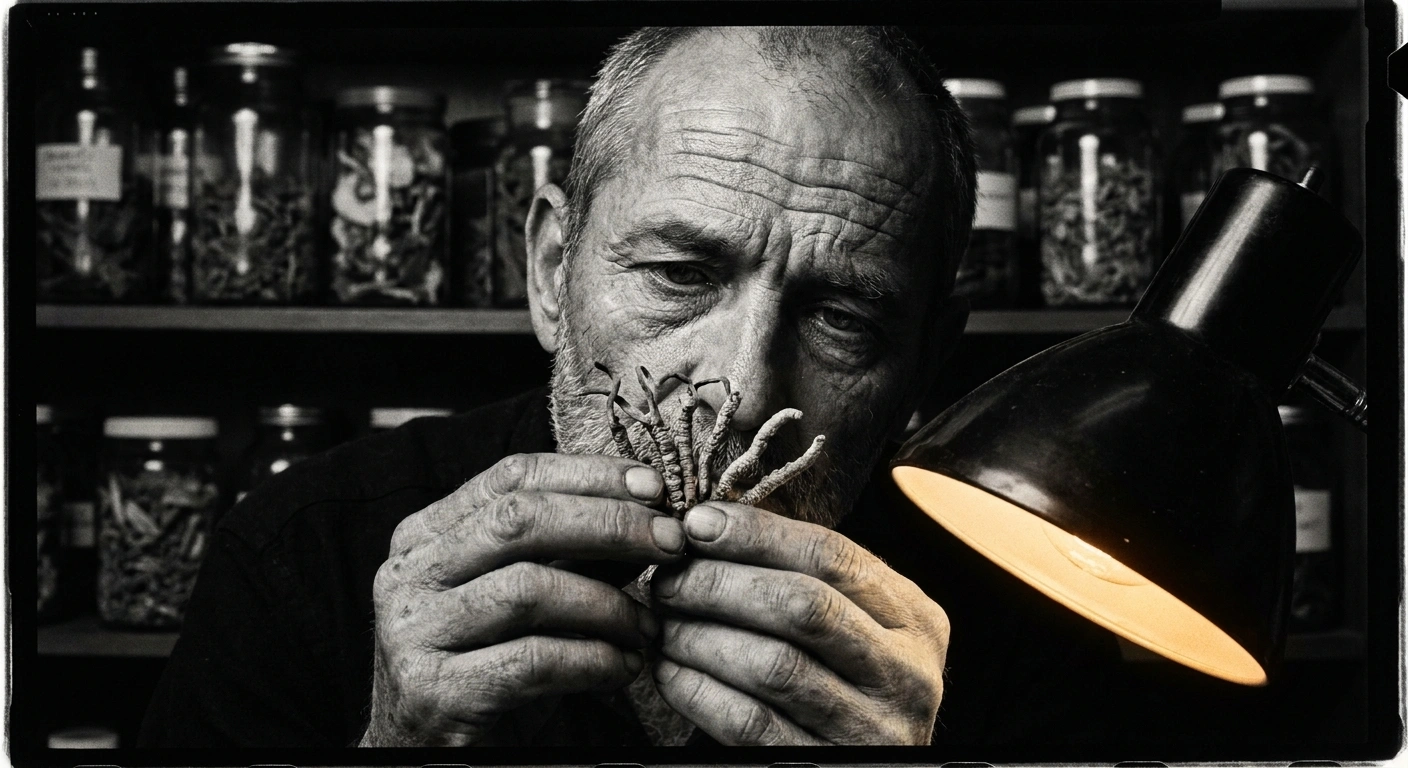
A 1997 study published in the American Journal of Chinese Medicine exposed mouse Leydig cells to Cordyceps sinensis water extract and measured testosterone output over four hours. Production doubled. The mechanism traced directly to steroidogenic acute regulatory (StAR) protein — the rate-limiting molecule that controls cholesterol transport into mitochondria, where testosterone synthesis begins.
That in vitro result has been the foundation of Cordyceps testosterone marketing for nearly thirty years. What has not followed is a comparable body of human clinical trials. The cellular mechanism is real and well-characterized. Whether 1 to 3 grams of mushroom powder in a healthy man over 40 produces that same signal through intact human physiology is a separate question, and the honest answer is less settled than the supplement industry implies.
For men building a serious testosterone protocol, Cordyceps occupies an unusual position: the strongest mechanistic case among adaptogenic mushrooms, the weakest direct human testosterone evidence, and the best-supported human data on a closely related benefit — aerobic capacity — that improves testosterone indirectly.
In this article:
- What Cordyceps is
- How it affects testosterone: the mechanism
- What the research shows
- The evidence gap
- Cordyceps and VO2 max: the stronger human case
- Who might benefit
- Cordyceps sinensis vs militaris: which to take
- Dosage and protocol
- How it fits into a testosterone protocol
- FAQ
Key Takeaways
| Finding | Source |
|---|---|
| Cordyceps sinensis water extract doubled testosterone production in cultured Leydig cells | Chen et al., Am J Chin Med, 1997 |
| Mechanism: upregulation of StAR protein — rate-limiting step in testosterone biosynthesis | Mechanisms review, J Ethnopharmacol, 2014 |
| Animal studies show consistent testosterone elevation across multiple species | Multiple, 1997–2020 |
| No published RCT in healthy men over 40 measuring testosterone as primary endpoint | Evidence gap as of 2026 |
| Cordyceps militaris (3g/day, 3 weeks) improved VO2 max and time-to-exhaustion in a placebo-controlled trial | Hirsch et al., J Dietary Supplements, 2017 |
| Higher VO2 max (1 MET increase) independently associated with 13% lower all-cause mortality | JACC, 2022 |
| Cordycepin (3'-deoxyadenosine) and beta-glucans are the primary bioactive fractions | Tuli et al., 3 Biotech, 2014 |
What Cordyceps Is
Cordyceps is a genus of parasitic fungi with over 600 species. Two species dominate the supplement literature: Cordyceps sinensis (now classified as Ophiocordyceps sinensis), collected from high-altitude Tibetan plateau regions at elevations above 3,500 meters, and Cordyceps militaris, which grows on insect pupae and can be cultivated at commercial scale.
Wild Cordyceps sinensis has been used in Traditional Chinese Medicine for centuries as a kidney and lung tonic, prescribed for fatigue, reduced libido, respiratory weakness, and poor recovery after illness. The classical TCM indications overlap substantially with what Western medicine now recognizes as symptoms of declining testosterone and falling VO2 max — a convergence that has driven modern research interest.
Both species contain cordycepin (3'-deoxyadenosine), beta-glucan polysaccharides, adenosine, various amino acids, and trace sterols. Cordyceps militaris contains substantially higher cordycepin concentrations than wild C. sinensis, which makes modern cultured preparations of C. militaris more pharmacologically predictable than the expensive wild product, where bioactive content varies by harvest location and season.
How It Affects Testosterone: The Mechanism
The cellular mechanism for Cordyceps and testosterone is better documented than for most botanical supplements. Three pathways operate in parallel, each acting at a different point in the steroidogenesis chain.
StAR protein upregulation. Testosterone biosynthesis begins when cholesterol crosses the inner mitochondrial membrane — a transport step controlled by StAR protein. This is the rate-limiting checkpoint: more StAR expression means more cholesterol available for testosterone synthesis downstream. The Chen et al. (1997) Leydig cell study demonstrated that Cordyceps sinensis extract directly increased StAR mRNA and protein expression, which explains why testosterone output doubled within hours of exposure.
3β-HSD and P450scc activity. Two enzymes convert cholesterol into testosterone through sequential steps: 3β-hydroxysteroid dehydrogenase (3β-HSD) and cytochrome P450 side-chain cleavage (P450scc). Multiple animal studies have shown Cordyceps extracts upregulate both enzyme activities in testicular tissue, amplifying the conversion efficiency at the enzymatic level.
Cortisol suppression via adaptogenic action. Cortisol and testosterone share a biological inverse relationship: chronic cortisol elevation suppresses the hypothalamic-pituitary-gonadal axis, reducing LH secretion and blunting testicular response. Cordyceps functions as an adaptogen — it modulates the HPA axis response to physical and psychological stress. Reduced cortisol load produces an indirect testosterone-supporting effect that operates even when direct testicular mechanisms are saturated. This connects to the full cortisol picture explained in high cortisol symptoms in men over 40.
| Mechanism | Site of action | Direct / Indirect |
|---|---|---|
| StAR protein upregulation | Leydig cell mitochondria | Direct |
| 3β-HSD and P450scc upregulation | Steroidogenic enzymes | Direct |
| Cortisol / HPA axis modulation | Hypothalamic-pituitary axis | Indirect |
| Improved aerobic capacity → better training → higher T | Systemic / peripheral | Indirect |
What the Research Shows
In Vitro: Strong, Consistent Signal
The Chen et al. (1997) study published in the American Journal of Chinese Medicine (PMID: 9364345) remains the most-cited primary evidence. Mouse Leydig cells exposed to Cordyceps sinensis water extract produced twice the testosterone of controls within four hours. Subsequent in vitro work replicated and extended the finding across different extract types and cell preparations, establishing that the effect is not a single-study artifact.
A 2014 mechanisms review in the Journal of Ethnopharmacology mapped the full steroidogenesis pathway affected by Cordyceps extracts and identified StAR, 3β-HSD, and P450scc as the convergent targets. The in vitro evidence base for Cordyceps testosterone effects is substantively stronger than for most botanical supplements — the mechanism is not merely speculated but directly observed in the relevant cell type.
Animal Studies: Consistent Across Species
Rodent studies have produced consistent findings across multiple experimental designs. Oral Cordyceps supplementation increased serum testosterone in normal male rats, in chemically induced hypogonadal models, and in aged animals with declining testicular function. One 2010 study in Asian Journal of Andrology found that Cordyceps sinensis extract restored testosterone and sperm quality in cyclophosphamide-treated mice — a chemotherapy agent that damages testicular function.
Animal-to-human translation is imperfect; a compound that works in rodents does not guarantee human efficacy. But the consistent, cross-species animal findings provide stronger preclinical support than most botanical testosterone supplements carry.
Human Studies: Limited but Not Absent
Human evidence exists, but mostly for CordyMax Cs-4 — a standardized fermentation product of Cordyceps sinensis mycelium developed in China and used in multiple clinical studies. A review by Zhu et al. (1998) in the Journal of Alternative and Complementary Medicine documented multiple small Chinese clinical trials that reported improved fatigue, respiratory function, and libido in older men using Cs-4 — consistent with testosterone-adjacent benefits, though not measuring testosterone directly as a primary endpoint.
No published double-blind placebo-controlled RCT has enrolled healthy men over 40 and measured serum testosterone as the primary outcome for Cordyceps supplementation. The gap between mechanism and confirmed human endpoint mirrors the situation with other lesser-studied adaptogens covered earlier in this series, including pine pollen and stinging nettle root.
The Evidence Gap
The honest summary: in vitro evidence is strong, animal evidence is consistent, human evidence for testosterone specifically is absent at the RCT level.
This does not mean Cordyceps has no testosterone effect in men. It means the question has not been properly tested. The barriers are partly practical — wild Cordyceps sinensis is among the most expensive ingredients on Earth (prices exceed $20,000 per kilogram for high-grade Tibetan material), making large-scale RCTs expensive to fund without pharmaceutical backing. Cordyceps militaris is cheaper and increasingly available as a cultivated product, and is the more likely substrate for future human testosterone trials.
Compare the evidence position to the supplements with the strongest human testosterone data in this series: tongkat ali has multiple RCTs in aging men with testosterone as primary endpoint. Ashwagandha has similar support. Fenugreek has placebo-controlled data in healthy men. Cordyceps does not — yet. The mechanistic case is stronger than most, but the clinical confirmation is behind the curve.
Cordyceps and VO2 Max: The Stronger Human Case
Where human evidence is substantially better is aerobic capacity. A 2017 randomized placebo-controlled trial by Hirsch et al. published in the Journal of Dietary Supplements tested Cordyceps militaris extract (3 grams per day) against placebo over three weeks in recreationally active adults. The Cordyceps group showed significant improvements in VO2 max and time-to-exhaustion compared to placebo.
This matters for testosterone for two reasons. First, exercise capacity and testosterone are positively correlated: men who train harder, recover better, and sustain higher training volumes over time maintain higher testosterone levels as they age. Second, VO2 max itself predicts mortality independent of testosterone. Each 1 MET increase in aerobic fitness associates with approximately 13 percent lower all-cause mortality in large cohort studies — data reviewed in detail at the VO2 max mortality calculator.
The indirect pathway — better aerobic capacity enables more effective training, which maintains testosterone — may be Cordyceps' most reliable mechanism in practice, even if a direct testicular effect operates in parallel. This makes Cordyceps a stronger fit alongside a training program than as a standalone testosterone supplement taken by sedentary men.
| Cordyceps outcome | Evidence quality | Human RCT support |
|---|---|---|
| Testosterone elevation | Strong mechanistic, weak direct human | None as primary endpoint |
| VO2 max / aerobic capacity | Moderate | Yes (Hirsch et al., 2017) |
| Fatigue reduction | Moderate | Yes (multiple small trials) |
| Libido / sexual function | Weak | No RCTs; traditional use only |
Who Might Benefit
Men with both testosterone and aerobic fitness concerns. Cordyceps sits at the intersection of testosterone support and aerobic capacity enhancement. Men who are training but recovering poorly, seeing declining exercise output alongside testosterone decline, represent the clearest use case. The compound potentially addresses both problems through related but distinct pathways.
Men whose testosterone protocol has deficiencies corrected. The high-return interventions come first: men deficient in vitamin D, zinc, or magnesium see reliable testosterone increases from correction. Cordyceps belongs at a later tier, after foundations are addressed. Running a free testosterone check at the free testosterone calculator establishes a baseline for tracking any response.
Men with high training loads and suboptimal recovery. The adaptogenic properties that reduce cortisol response to physical stress make Cordyceps useful for men training hard but sleeping poorly, managing life stress alongside a demanding exercise program, or noticing the "wired and tired" pattern associated with elevated cortisol. This links to the broader cortisol management protocol at how to lower cortisol naturally.
Men without mushroom sensitivities or autoimmune conditions. Cordyceps immune-modulating beta-glucans can stimulate immune activity, which creates potential concerns for men on immunosuppressant medications or with autoimmune conditions. Men on warfarin or other blood thinners should consult their physician; cordycepin has mild anticoagulant properties at high doses.
Cordyceps Sinensis vs Militaris: Which to Take
| Factor | Cordyceps sinensis (wild) | Cordyceps sinensis (Cs-4, fermented) | Cordyceps militaris (cultivated) |
|---|---|---|---|
| Cost | Very high ($20,000+/kg) | Moderate | Low-moderate |
| Cordycepin content | Low-variable | Moderate | High |
| Beta-glucan content | Moderate | Moderate | Moderate-high |
| Clinical research basis | Traditional + small trials | Multiple small Chinese RCTs | One Western RCT (Hirsch 2017) |
| Availability | Poor (specialty only) | Good | Good |
| Consistency | Poor (wild harvest) | Good (standardized) | Good (cultivated) |
For practical purposes, Cordyceps militaris extract with standardized cordycepin content is the most rational choice for modern supplementation. It contains higher cordycepin concentrations than most wild C. sinensis, is cultivated under controlled conditions for consistent bioactive content, and is the substrate used in the best available Western human trial.
Cs-4 fermented mycelium is the most-studied human product and remains a reasonable choice, particularly for men drawn to the established Chinese clinical literature. The main drawback is variable cordycepin content compared to militaris.
Avoid products containing only mycelium grown on grain substrate ("mushroom mycelium on grain") without standardization or third-party testing — these frequently contain more grain starch than functional mushroom material.
Dosage and Protocol
Standard dosing range: 1 to 3 grams daily of Cordyceps militaris extract (standardized to cordycepin) or Cs-4 fermented product. The Hirsch et al. VO2 max trial used 3 grams daily. Most human studies fall within this range.
Timing: Pre-workout or morning dosing aligns with the evidence for aerobic performance benefits. For adaptogenic and testosterone-adjacent effects, consistent daily dosing matters more than timing.
Duration: Adaptogenic effects and hormonal changes typically require 8 to 12 weeks of consistent use before measurable changes appear in biomarkers. A four-week trial produces no useful hormonal data. Run baseline bloodwork measuring total testosterone, free testosterone, SHBG, and cortisol before starting, and retest at week twelve.
Form: Capsules or powder (not mycelium on grain, which lacks standardization). Alcohol tinctures exist for Cordyceps but have no human data advantage over standardized powder for this indication.
What not to take with it: Men on immunosuppressant medications, anticoagulants, or anti-platelet drugs should confirm with their physician before use. Beta-glucan immune stimulation can interact with immunosuppression protocols. Cordycepin's mild anticoagulant effect is unlikely to matter at standard doses but warrants attention at higher doses alongside blood thinners.
How It Fits Into a Testosterone Protocol
Cordyceps occupies the secondary tier of a testosterone protocol — after deficiency correction, before more speculative supplements.
The highest-return interventions remain: correct deficiencies in vitamin D, zinc, and magnesium. These produce reliable, well-studied testosterone increases in deficient men. If your total testosterone has been measured and falls below concerning thresholds, the testosterone mortality zone calculator puts the numbers in clinical context.
The secondary tier — supplements with either strong mechanistic support or moderate human data — includes tongkat ali, ashwagandha, fenugreek, and Cordyceps. Within this tier, Cordyceps fits best for men who also train and want compound benefits across testosterone, recovery, and aerobic capacity.
Cordyceps does not target SHBG specifically (unlike boron or the steroidal saponin mechanisms in fenugreek), so it stacks naturally with SHBG-targeting compounds rather than duplicating them. Men with confirmed high SHBG driving low free testosterone should address that mechanism first, as explained in SHBG and free testosterone.
The complete natural testosterone optimization framework, with tiers and sequencing, is at how to increase free testosterone naturally.
FAQ
Does cordyceps increase testosterone?
In vitro studies show Cordyceps sinensis doubles testosterone in Leydig cells via StAR protein upregulation. Animal studies confirm consistent effects. No placebo-controlled human RCT has measured testosterone as primary endpoint in healthy men over 40. The mechanism is plausible; the direct human confirmation is not yet available.
What is the best form of cordyceps for testosterone?
Cordyceps militaris extract standardized to cordycepin content, or Cs-4 fermented Cordyceps sinensis mycelium. Both have human study precedent. Avoid unstandardized mycelium-on-grain products — these lack functional bioactive content. The Hirsch et al. (2017) VO2 max trial used C. militaris at 3g daily.
How long does cordyceps take to work?
Adaptogenic and hormonal effects require 8 to 12 weeks of consistent daily supplementation before markers shift. Aerobic performance improvements in the Hirsch trial emerged over three weeks. A four-week trial produces no useful testosterone data — run bloodwork at baseline and at week twelve.
Can I take cordyceps with ashwagandha?
Yes. Cordyceps works through Leydig cell direct stimulation and HPA axis modulation; ashwagandha primarily reduces cortisol and blunts stress-induced testosterone suppression. The mechanisms are complementary rather than duplicative. No adverse interaction data exist at standard doses.
Is cordyceps safe for men over 40?
At standard doses (1 to 3 grams daily), Cordyceps is generally well-tolerated. Men with autoimmune conditions or taking immunosuppressants should consult their physician — beta-glucan content stimulates immune activity. Men on blood thinners should be cautious at higher doses; cordycepin has mild anticoagulant properties. No clinically significant interaction with common supplements is documented.
Does cordyceps raise testosterone or free testosterone?
The cellular mechanism targets testosterone biosynthesis directly, suggesting effects on total testosterone production. Unlike boron or pine pollen — which target SHBG to raise free testosterone while leaving total testosterone unchanged — Cordyceps works upstream at the production level. If it works in humans as the in vitro evidence predicts, total testosterone should rise first, pulling free testosterone up with it.
The Bottom Line
Cordyceps presents the strongest cellular mechanism case among the adaptogenic mushrooms for testosterone support, with direct evidence of Leydig cell stimulation at the rate-limiting step of steroidogenesis. The animal evidence is consistent. The honest limitation is the absence of a placebo-controlled human RCT measuring testosterone as a primary endpoint in healthy aging men.
Where the human evidence is substantive, it points to aerobic capacity — a benefit with its own testosterone dividend and meaningful mortality impact. Men who train and want a compound effect across performance, recovery, and testosterone belong in the audience for Cordyceps more than sedentary men chasing a hormonal shortcut.
Start with a complete testosterone panel to establish baseline numbers, then evaluate whether your bottleneck is production (where Cordyceps acts), binding capacity (where SHBG-targeting compounds act), or something systemic. The mechanism tells you the right tool. The bloodwork tells you whether the tool worked.
Consult your healthcare provider before starting any new supplement program, particularly if you have immune conditions, take blood thinners, or are on medications for chronic illness.
Keep reading
More from Health for men over 40.
Medical Disclaimer: This article is for informational purposes only and does not constitute medical advice. Always consult your healthcare provider before starting any new exercise, nutrition, or supplement program. Written and reviewed by The PrimeVital Desk.