Educational information, not medical advice. Drafted with AI from the sources cited and reviewed before publishing. How we work.
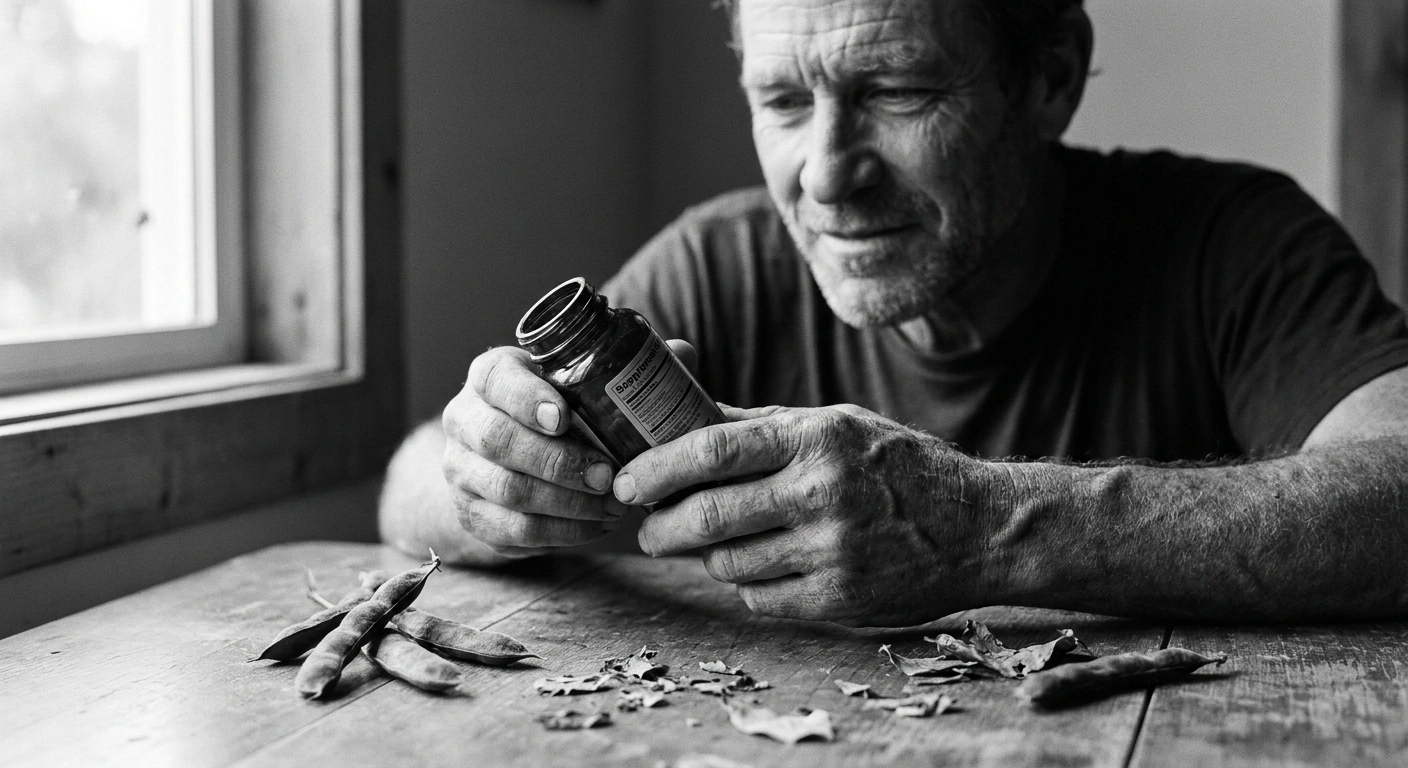
A 2009 study in Fertility and Sterility enrolled 60 infertile men and measured what happened after three months of daily Mucuna pruriens seed powder. Serum testosterone rose 27.3%. Luteinizing hormone increased by 41.6%. Prolactin fell. The researchers concluded the plant worked by acting on the hypothalamic-pituitary-gonadal axis, not by delivering exogenous hormones.
That mechanism is what separates Mucuna pruriens from most other testosterone supplements. Rather than attempting to stimulate Leydig cells directly, it works upstream. The seed contains L-DOPA, a direct precursor to dopamine. Elevated dopamine suppresses prolactin at the pituitary. Reduced prolactin removes a brake on gonadotropin-releasing hormone, which increases LH output, which tells the testes to produce more testosterone.
The mechanism is sound. The clinical database is thin. Here is what the research shows, who it applies to, and how it fits into a protocol for men over 40.
In this article:
- What mucuna pruriens is
- How it works: the L-DOPA to dopamine pathway
- What the research shows
- The clinical evidence gap
- Who is most likely to benefit
- Dosage and protocol
- What to look for when buying
- How it fits into a testosterone protocol
- FAQ
Key Takeaways
| Finding | Source |
|---|---|
| Serum testosterone increased 27.3% in infertile men after 90 days of M. pruriens | Shukla et al., Fertil Steril, 2009 |
| Luteinizing hormone increased 41.6% in the same trial | Shukla et al., Fertil Steril, 2009 |
| Prolactin decreased significantly, supporting the dopaminergic mechanism | Shukla et al., Fertil Steril, 2009 |
| Cortisol fell alongside testosterone changes, suggesting a stress-axis link | Shukla et al., 2009; Mahdi et al., ECAM, 2010 |
| Seeds contain 4-9% L-DOPA by dry weight; standardized extracts at 15% L-DOPA are available | Constituent analysis |
| No published RCT has measured effects in healthy eugonadal men over 40 | Evidence gap as of 2026 |
What Mucuna Pruriens Is
Mucuna pruriens, commonly called velvet bean, is a tropical legume native to India, Africa, and the Caribbean. The plant grows as a food and cover crop throughout the tropics. In Ayurvedic medicine, the seed has been used for centuries under the name Kapikachhu for conditions including male infertility, Parkinson's-like symptoms, and sexual dysfunction.
The seeds contain several bioactive compounds. L-DOPA (3,4-dihydroxy-L-phenylalanine) accounts for 4 to 9 percent of dry seed weight depending on variety and growing conditions. The seeds also contain alkaloids, tannins, flavonoids, beta-sitosterol, and proteins. L-DOPA is the compound responsible for the neurological and hormonal effects documented in clinical studies. It is the same compound used pharmaceutically to treat Parkinson's disease, where dopamine itself cannot cross the blood-brain barrier but its precursor can.
Standard commercial extracts are standardized to 15 percent L-DOPA, providing a consistent dose. Whole seed powder provides a naturally varying L-DOPA concentration, which is what clinical trials used. Both forms are available; the trade-off is predictability versus proximity to study conditions.
How It Works: The L-DOPA to Dopamine Pathway
The mechanism of Mucuna pruriens on testosterone differs from every other supplement in this category.
Zinc, magnesium, and vitamin D act as co-factors in testosterone synthesis. Ashwagandha reduces cortisol. Tongkat ali stimulates LH through its quassinoid content. Boron displaces testosterone from SHBG. Mucuna pruriens reaches the same endpoint through dopamine signaling in the brain.
After oral ingestion and absorption, L-DOPA crosses the blood-brain barrier. The enzyme DOPA decarboxylase converts it to dopamine within the central nervous system. Dopamine binds to D2 receptors on lactotroph cells in the anterior pituitary, suppressing prolactin secretion. Prolactin normally inhibits GnRH pulsatility from the hypothalamus. Remove that prolactin brake and GnRH pulse frequency increases. The pituitary responds with higher LH and FSH output. LH binds to Leydig cells in the testes and signals testosterone synthesis.
This is why Mucuna pruriens shows the most consistent effects in men with stress-related hormonal suppression. Chronic stress elevates both cortisol and prolactin. When prolactin is part of what is suppressing testosterone, a dopaminergic intervention targets the actual bottleneck rather than working around it.
Men with primary hypogonadism (failed testes, high LH) will not benefit from further LH stimulation. The mechanism only adds value when the pituitary-to-testis signal is the limiting factor.
What the Research Shows
The 2009 Fertility and Sterility Study
Shukla et al. (2009) published the primary human trial. Sixty infertile men with documented psychological stress received 5 grams of Mucuna pruriens seed powder daily for three months. A control group of 60 fertile healthy men received no treatment.
Results after 90 days in the treatment group:
- Serum testosterone: 4.28 ng/mL to 5.45 ng/mL (+27.3%)
- LH: significant increase (+41.6%)
- FSH: significant increase
- Prolactin: significant decrease
- Cortisol: significant decrease
- Sperm concentration, motility, and morphology all improved
The study was open-label. Participants knew they were taking an intervention. The control group was a different population, fertile men rather than a placebo-controlled arm of the same group. These are real methodological limitations. The magnitude of hormonal change and the coherence with the proposed mechanism still make this a significant data point, but it falls short of a blinded RCT.
The 2010 ECAM Study
Mahdi et al. (2010) in Evidence-Based Complementary and Alternative Medicine examined 75 infertile men on M. pruriens for three months with emphasis on oxidative stress markers. Testosterone increased and prolactin decreased in parallel with reductions in reactive oxygen species. The study suggested that the hormonal changes accompany reduced oxidative load, which matters because oxidative stress at the testicular level independently impairs Leydig cell function. This is a plausible secondary mechanism: L-DOPA has antioxidant properties, and reducing testicular oxidative burden may support testosterone synthesis independent of the prolactin pathway.
Animal Data
Multiple rodent studies demonstrate consistent testosterone increases after M. pruriens administration, with parallel LH increases and prolactin decreases that match the proposed mechanism. Rat data supports the human findings but cannot substitute for controlled human trials. The animal studies are useful for confirming biological plausibility, not for establishing clinical dosing in men.
The Clinical Evidence Gap
The evidence gap here is larger than for most supplements in this series.
All primary human studies used infertile men with documented psychological stress. Stress elevates prolactin. When prolactin is demonstrably elevated, a dopaminergic intervention has a clear, measurable target. In healthy men over 40 without hyperprolactinemia, prolactin may already be in the normal range. What additional prolactin suppression accomplishes in that scenario has not been studied.
No published RCT has measured Mucuna pruriens' effect on testosterone in healthy eugonadal men or in men experiencing standard age-related testosterone decline. The existing evidence supports this supplement for stress-related hormonal suppression. It does not establish efficacy for routine testosterone optimization in men without elevated prolactin or documented stress-axis dysfunction.
Compare this with ashwagandha, which has five RCTs including trials in recreationally active stressed men showing consistent cortisol and testosterone effects. Tongkat ali has multiple trials in aging men with low-normal testosterone showing moderate free testosterone improvements. Mucuna pruriens has fewer trials and a more specific target population.
This absence of evidence is not evidence of absence. It means the research has not been done in the population most likely to use this supplement based on marketing. If you are a healthy man over 40 with normal prolactin levels, you are taking a scientifically plausible supplement for which the data happens not to exist yet.
Who Is Most Likely to Benefit
Chronic stress with suppressed hormones. Prolonged psychological or physical stress elevates both cortisol and prolactin. Both hormones suppress testosterone through different pathways: cortisol at the hypothalamic level, prolactin by inhibiting GnRH pulsatility. If you have high cortisol symptoms alongside low libido, fatigue, and low testosterone, the clinical data for Mucuna pruriens aligns with your hormonal profile.
Elevated prolactin with low testosterone. Mildly elevated prolactin from stress, heavy alcohol use, excess body fat, or certain medications blunts testosterone production. Prolactin is measured on a standard hormone panel. If your prolactin is above 15 ng/mL and your total testosterone is below 400 ng/dL, you have a rationale for a dopaminergic supplement. Severely elevated prolactin (above 30-40 ng/mL) warrants imaging to rule out pituitary adenoma before any supplement use.
Infertility concurrent with testosterone deficiency. The sperm quality evidence in M. pruriens trials is among the most consistent findings. Men addressing infertility alongside hormonal optimization have the strongest case for a clinical trial of this supplement.
Less likely to benefit. Men with primary hypogonadism (high LH, low testosterone indicating testicular failure) will not benefit from further LH stimulation — their pituitary is already signaling maximally. Men with normal prolactin, no elevated stress hormones, and testosterone decline explained by other factors have no published evidence for effect.
Before spending money on Mucuna pruriens, check whether SHBG elevation is the primary driver of low free testosterone. If total T is in the 450-550 ng/dL range but SHBG is above 50 nmol/L, the free testosterone calculator will show you that bioavailable T is low despite an adequate total. In that case, SHBG-targeting interventions address the actual bottleneck more directly than prolactin suppression.
Dosage and Protocol
Clinical studies used 5 grams of whole seed powder per day in two divided doses. Seeds from the studies contained approximately 4 to 9 percent L-DOPA, providing roughly 200 to 450 milligrams of L-DOPA per day at that dose.
With standardized 15% L-DOPA extract:
- 333 to 400 mg extract per day provides approximately 50 to 60 mg L-DOPA per dose
- Divide into morning and evening doses with meals
- Take with food to reduce nausea, which is the most common side effect at clinical doses
Timing consideration. L-DOPA absorption competes with large neutral amino acids from dietary protein. If you take Mucuna pruriens within a high-protein meal, absorption may be reduced. Take it 30 to 45 minutes before or at least 2 hours after a high-protein meal for best absorption. This matters more with extracts than whole seed powder.
Trial duration. Clinical studies ran for 90 days minimum before assessing hormonal changes. A 30-day trial will not yield meaningful data. Commit to 12 weeks and test hormones before and after (at minimum: total testosterone, free testosterone, SHBG, LH, prolactin, and cortisol).
What to Look for When Buying
Standardized extract vs. whole seed powder. For a predictable, measurable dose of L-DOPA, 15% standardized extract is preferable to whole seed powder where L-DOPA content varies by batch and harvest conditions. Whole seed powder has the advantage of matching what clinical trials actually used, but dosing uncertainty is real.
Certificate of Analysis. L-DOPA content should be verifiable by independent lab testing. Reputable manufacturers provide a COA showing actual L-DOPA percentage against label claim. Request it or look for brands that publish them publicly.
Standalone ingredient, known dose. Many "testosterone booster" formulas include M. pruriens inside a proprietary blend at undisclosed doses. You cannot assess adequacy without knowing the milligrams. Look for products listing Mucuna pruriens extract with a stated dose and stated L-DOPA percentage. If the listing says "proprietary blend" with several ingredients, skip it.
Forms to avoid. Products listing Mucuna pruriens at doses below 200 mg extract or equivalent whole seed powder are unlikely to provide the L-DOPA concentrations used in clinical studies. Token inclusion in multi-ingredient stacks does not replicate trial conditions.
How It Fits into a Testosterone Protocol
Mucuna pruriens is most accurately understood as a stress-axis intervention with downstream testosterone effects — not a direct testosterone stimulator.
The order of operations for a testosterone protocol matters. Fix nutrient deficiencies first: vitamin D, zinc, and magnesium are the three micronutrients with the strongest evidence for testosterone support when they are deficient. Deficiency-driven suppression responds within 12 weeks to repletion at far lower cost than specialty supplements.
Optimize sleep quality next. Sleep deprivation below 5 hours per night causes a 10 to 15 percent testosterone reduction. No supplement compensates for that sustained deficit.
Address body composition if visceral fat is elevated. Visceral fat aromatizes testosterone to estrogen and independently elevates prolactin through adipokine signaling. Mucuna pruriens cannot out-supplement a 40 percent body fat composition. The dopaminergic mechanism has a ceiling when adipose tissue is actively converting testosterone downstream.
Once those fundamentals are addressed, if chronic stress and elevated prolactin remain part of the hormonal picture, Mucuna pruriens at clinical dosing for a 90-day trial is a reasonable addition to the testosterone optimization protocol.
Track the right markers before and after. A prolactin reduction without a testosterone increase means the mechanism is working but the rate-limiting factor is elsewhere in the axis. A testosterone increase without prolactin change suggests either a different mechanism or a placebo response. Quantify before drawing conclusions.
FAQ
Does mucuna pruriens increase testosterone?
Clinical trials in infertile men with stress-related hormonal suppression show testosterone increases averaging 27% over 90 days. No RCT has established this effect in healthy men without elevated prolactin or documented stress-axis dysfunction. The evidence exists in a specific population and has not been generalized to healthy aging men.
What is the connection between L-DOPA and testosterone?
L-DOPA converts to dopamine in the brain. Dopamine suppresses prolactin secretion from the pituitary via D2 receptors. Elevated prolactin inhibits GnRH pulsatility, reducing LH and testosterone output. Lowering prolactin restores the GnRH signal, which can increase testosterone production if the testes are functioning normally.
How does mucuna pruriens compare to ashwagandha for testosterone?
Ashwagandha primarily lowers cortisol; Mucuna pruriens primarily lowers prolactin. Both can improve testosterone through distinct upstream pathways. Ashwagandha has more RCTs and includes trials in healthy stressed men, not just infertile men. If your hormonal suppression is stress-driven with elevated cortisol, ashwagandha has stronger evidence. If prolactin is part of the picture, the two can be used alongside each other without known interaction.
How long before mucuna pruriens affects testosterone?
Clinical studies ran for 90 days. Assess no earlier than 12 weeks of consistent daily use. Shorter trial periods will not yield meaningful hormonal data.
What are the side effects of mucuna pruriens?
At clinical doses (5g seed powder or equivalent 15% extract), the most common side effect is nausea, particularly without food. Start at the lower end of the clinical range. High doses can cause dizziness, headache, and in susceptible individuals, agitation or anxiety. L-DOPA is a pharmacologically active compound, not a benign food ingredient at clinical doses.
Is mucuna pruriens safe with medications?
L-DOPA has clinically significant interactions with MAO inhibitors (selegiline, rasagiline), antipsychotics that block D2 receptors (haloperidol, risperidone, quetiapine), and pharmaceutical L-DOPA preparations for Parkinson's disease. Men taking any of these medications must consult their prescribing physician before use. The dopaminergic activity of Mucuna pruriens is not comparable to taking an ordinary herbal supplement — it affects neurotransmitter systems that interact with multiple drug classes.
Can you take mucuna pruriens with other testosterone supplements?
Mucuna pruriens targets a distinct mechanism from boron, zinc, tongkat ali, and fenugreek. Combining it with other testosterone support supplements is common in clinical practice, and there are no documented interactions. The combination with ashwagandha is particularly rational given complementary mechanisms (prolactin vs. cortisol reduction).
The Bottom Line
Mucuna pruriens has genuine clinical support for testosterone improvement in men whose hormonal suppression involves elevated prolactin and chronic stress. The mechanism is biologically sound and distinct from every other supplement in this series. The evidence base is narrower than ashwagandha or tongkat ali, and it applies most clearly to infertile men rather than healthy aging men.
Run a baseline prolactin measurement before using it — your hormone panel should include prolactin alongside total and free testosterone. If prolactin is elevated (above 15 ng/mL) and total testosterone is below 400 ng/dL, a 90-day trial at clinical dosing with before and after bloodwork is warranted. If prolactin is normal and your testosterone decline has other drivers, the rationale for this particular supplement weakens considerably, and your time and money are better directed at the interventions with broader evidence.
Consult your healthcare provider before starting any new supplement program, particularly if you take medications that affect dopamine pathways.
Keep reading
More from Health for men over 40.
Medical Disclaimer: This article is for informational purposes only and does not constitute medical advice. Always consult your healthcare provider before starting any new exercise, nutrition, or supplement program. Written and reviewed by The PrimeVital Desk.