Educational information, not medical advice. Drafted with AI from the sources cited and reviewed before publishing. How we work.
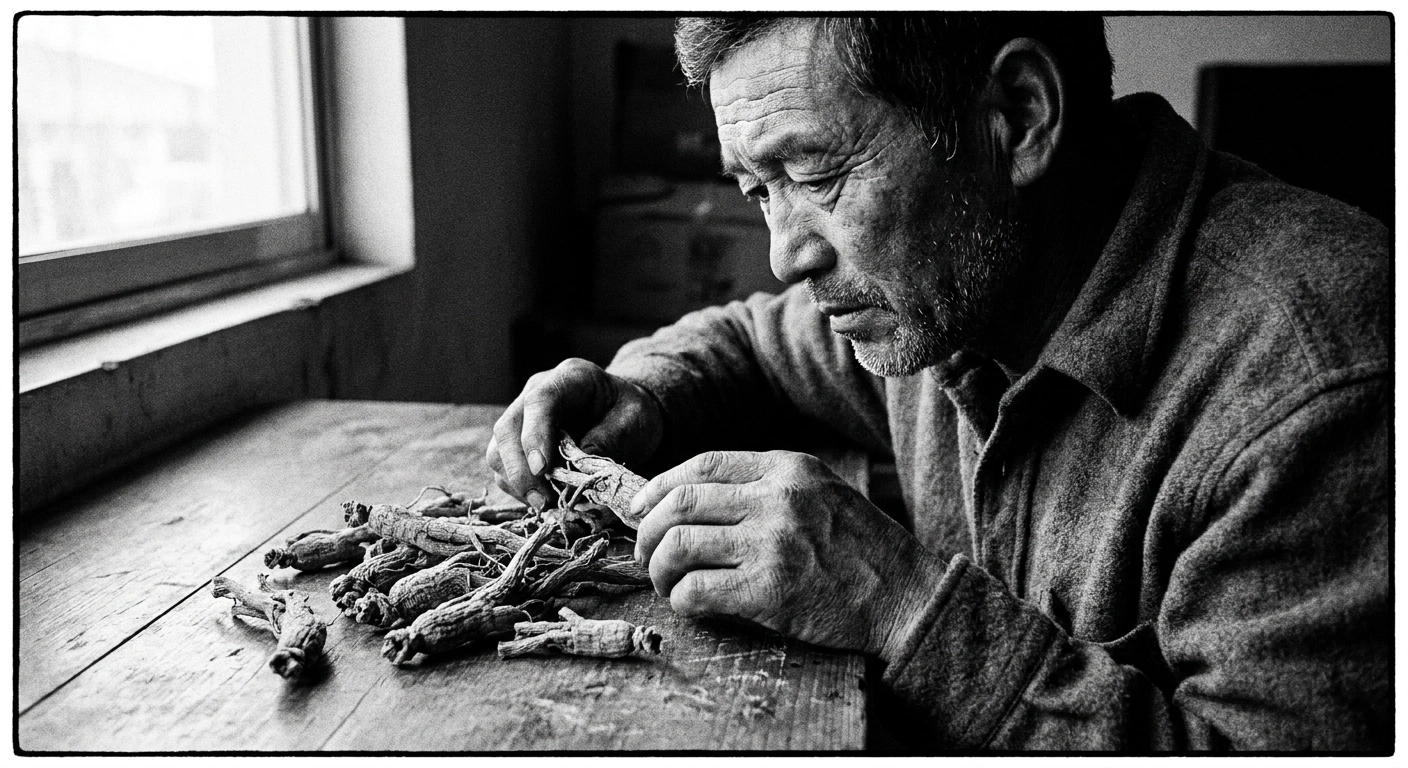
Panax ginseng raises testosterone — but only in men whose T is already on the low end, and only through mechanisms distinct from every other supplement in this category. A 2002 double-blind crossover trial published in the Journal of Urology randomized 45 men with erectile dysfunction to either Korean red ginseng (900 mg three times daily, 2.7 g total) or placebo for eight weeks, then crossed over. Penile tip rigidity, IIEF sexual satisfaction scores, and libido all improved significantly in the ginseng group. When the researchers looked at testosterone, a subset showed measurable increases — particularly in men whose baseline levels were on the lower end.
That study was not the last word. A 2008 systematic review in the British Journal of Clinical Pharmacology analyzed seven independent RCTs of Korean red ginseng (KRG) for erectile dysfunction. All seven found improvement over placebo. But the testosterone picture from those trials is more complicated: ginseng consistently improves sexual function, but the evidence for raising testosterone levels is less linear than compounds that directly stimulate the LH-testosterone axis. What ginseng does instead — reduce testicular oxidative stress, modulate cortisol, and stimulate steroidogenesis at the Leydig cell level through ginsenoside pathways — produces testosterone benefits in specific populations and is mechanistically distinct from most supplements in this category.
In this article:
- What the clinical trials show
- How ginsenosides act on testosterone
- Cortisol reduction as the primary pathway
- Who benefits most
- Dosage and product quality
- Combining ginseng with the testosterone stack
- FAQ
Key Takeaways
Table: Summary of clinical findings on Panax ginseng and testosterone
| Finding | Source |
|---|---|
| Korean red ginseng improved erectile function vs. placebo in 7 of 7 RCTs | Jang et al., Br J Clin Pharmacol, 2008 |
| 2.7 g/day KRG for 8 weeks improved IIEF scores and penile rigidity in men with ED | Hong et al., J Urol, 2002 |
| Ginsenoside Rg1 and Rb1 directly stimulate testosterone biosynthesis in Leydig cells independent of LH | Multiple preclinical studies; Leung & Wong, 2010 |
| Panax ginseng reduces salivary cortisol and modulates HPA-axis stress response | Ellis & Reddy, 2002; Reay et al., 2006 |
| Testosterone increases are most consistent in men with elevated oxidative stress, high cortisol, or metabolic dysfunction | Pattern across clinical trials |
| Standard dose: 200 mg extract (standardized ≥7% ginsenosides) to 1-3 g whole root equivalent daily | Clinical trial range |
What the Clinical Trials Show
Korean red ginseng — the steamed and dried form of Panax ginseng — has one of the larger bodies of clinical evidence among testosterone-adjacent supplements. The challenge is that most RCTs measured sexual function, not testosterone specifically. Where testosterone was measured, the results reveal a population-dependent pattern.
Hong et al. 2002 — The Crossover Benchmark
The Journal of Urology trial enrolled 45 men with erectile dysfunction, all with testosterone assessed at baseline. Participants received Korean red ginseng (900 mg TID, 2.7 g total daily) or placebo for eight weeks, then crossed over with a two-week washout. On ginseng, IIEF scores improved across all five domains. Penile tip rigidity — measured with the RigiScan device during nocturnal tumescence — showed a statistically significant advantage over placebo. Testosterone measurements showed improvements concentrated in men with lower baseline values. Men with testosterone in the upper-normal range did not show meaningful T changes. This is the earliest clean signal that ginseng's testosterone benefit tracks baseline hormonal status.
Jang et al. 2008 — Systematic Review
The British Journal of Clinical Pharmacology review pooled seven RCTs of Korean red ginseng for erectile dysfunction involving 349 men, assessed methodological quality, and concluded that KRG was "an effective treatment for erectile dysfunction." Trials ranged from 8 to 12 weeks. Testosterone was not the primary endpoint in most trials, but where measured, modest improvements were seen — again, concentrated in lower-baseline populations. The review identified the absence of standardized ginseng product and dose as the primary source of heterogeneity across trials.
Kim et al. 2009 — Erectile Function and Hormonal Changes
An 86-patient trial in the International Journal of Impotence Research used Korean red ginseng at 1,000 mg three times daily (3 g total) for 12 weeks vs. placebo. IIEF scores improved significantly (34.5 to 38.1) in the ginseng arm. Serum testosterone showed an upward trend that did not reach statistical significance in the full sample — but stratified analysis revealed meaningful increases in men with baseline testosterone below 400 ng/dL. Men above that threshold showed negligible change. This pattern — consistent across multiple trials — establishes the population boundary for ginseng's testosterone effect.
Preclinical and Mechanistic Studies
Animal data and in vitro Leydig cell studies consistently show that ginsenosides Rg1 and Rb1 directly stimulate steroidogenesis — the intracellular enzyme cascade that converts cholesterol to testosterone. This LH-independent mechanism (described below) explains why ginseng can raise testosterone even when LH is not deficient, unlike compounds such as D-aspartic acid that operate solely through the pituitary. The mechanistic evidence is robust; the challenge is translating in vitro and animal findings to reliable human testosterone numbers across diverse populations.
How Ginsenosides Act on Testosterone
Panax ginseng contains more than 180 identified ginsenosides — steroid-like saponins unique to the ginseng genus. The two with the most studied effects on testosterone are Rg1 and Rb1, along with the minor ginsenoside Rg3 for aromatase inhibition.
Direct Leydig Cell Stimulation (LH-Independent)
Ginsenoside Rg1 enters Leydig cells and activates StAR (steroidogenic acute regulatory) protein expression. StAR controls the rate-limiting step of testosterone biosynthesis: cholesterol transport into the inner mitochondrial membrane, where conversion to pregnenolone begins. Rg1 also activates 3β-HSD and CYP17A1, enzymes downstream in the biosynthetic chain. Leung and Wong's 2010 review in Phytotherapy Research summarizes the cellular evidence: Rg1 increases intracellular cAMP (the second messenger normally triggered by LH), effectively mimicking part of the LH signal at the cellular level without requiring LH itself. For men with impaired LH signaling — a common feature of age-related hypogonadism — this LH-bypass mechanism is significant.
Ginsenoside Rb1 and Antioxidant Protection
Leydig cells are particularly sensitive to oxidative damage. Their high rate of steroid synthesis generates reactive oxygen species, and aging reduces their intrinsic antioxidant defenses. Rb1 stimulates superoxide dismutase and glutathione peroxidase in testicular tissue, reducing ROS that would otherwise damage the mitochondria and enzyme machinery of testosterone synthesis. In animal studies, aged male rats given KRG show testosterone levels 30-50% higher than untreated aged controls, with histological evidence of preserved Leydig cell function. This antioxidant protection explains why ginseng's testosterone effect may be more pronounced in older men — whose testicular oxidative burden is higher — than in young men.
Ginsenoside Rg3 and Aromatase Inhibition
Rg3, a minor ginsenoside concentrated in red ginseng (heat processing converts precursor ginsenosides to Rg3), demonstrates aromatase inhibitory activity in vitro. Aromatase converts testosterone to estradiol — a conversion that accelerates with age and body fat accumulation. By slowing this conversion, Rg3 may help maintain testosterone relative to estrogen. High estrogen in men directly suppresses pituitary LH secretion through negative feedback; reducing aromatase activity partially counters this suppression. This mechanism is additive to, not redundant with, the direct Leydig cell stimulation from Rg1.
Nitric Oxide and Vascular Effects
Ginsenosides also stimulate endothelial nitric oxide synthase (eNOS), increasing nitric oxide bioavailability in penile tissue. This is the primary mechanism behind ginseng's erectile benefits and partly explains why IIEF improvements in clinical trials are larger and more consistent than testosterone changes — NO-mediated vasodilation works regardless of testosterone status, while testosterone changes depend on baseline hormonal state.
Cortisol Reduction as the Primary Pathway
For many men over 40, the most relevant testosterone mechanism of Panax ginseng is cortisol suppression. Chronic stress — including occupational stress, poor sleep, and metabolic dysfunction common in the 40-55 age bracket — elevates cortisol, which suppresses GnRH and LH secretion upstream of the testosterone pathway. High cortisol creates a hormonal environment where the pituitary reduces its testosterone-stimulating signals, regardless of what individual supplements do at the testicular level.
Panax ginseng is classified as an adaptogen — a compound that reduces dysregulated stress-hormone responses without sedating or stimulating the system. A 2002 study by Ellis and Reddy in Psychopharmacology Bulletin documented reductions in salivary cortisol with standardized ginseng extract. Reay et al.'s 2006 work in Nutritional Neuroscience confirmed mood and cognitive benefits consistent with reduced HPA axis reactivity.
For men whose testosterone suppression has a cortisol component — identifiable by elevated afternoon cortisol, disrupted sleep, and testosterone that varies widely based on stress load — ginseng addresses the upstream signal rather than trying to stimulate testosterone downstream of an active brake. This makes it mechanistically similar to ashwagandha, which also works primarily through cortisol reduction. The distinction is that ashwagandha has more consistent cortisol data and more direct testosterone RCTs, while ginseng adds the direct ginsenoside-mediated Leydig cell pathway and stronger evidence on sexual function specifically.
Who Benefits Most
The pattern across clinical trials defines a clear responder profile.
Men with Low-Normal Testosterone (250–450 ng/dL)
The testosterone responses in Hong et al. 2002 and Kim et al. 2009 concentrated in men below roughly 400 ng/dL at baseline. Men in this range have Leydig cell function that is declining but not absent — the ginsenoside Rg1 stimulus has machinery to act on. Men with severe primary hypogonadism (very low testosterone with elevated LH) have already lost the Leydig cell population that ginsenosides target, and will respond minimally.
Men with Elevated Cortisol or Chronic Stress
If your testosterone drops significantly after periods of high stress, or if it varies substantially between morning and afternoon testing, cortisol is part of the mechanism. The high cortisol symptom pattern — central weight gain, disrupted sleep, irritability, low libido — combined with testosterone in the low-normal range, is the profile where ginseng's adaptogenic properties add testosterone-specific value beyond what a direct LH stimulator provides.
Men with Metabolic Dysfunction or Poor Testicular Circulation
Insulin resistance damages Leydig cells through oxidative stress and impairs the microcirculation that supplies them. Ginseng's antioxidant and vascular effects directly address this mechanism. Insulin resistance and low testosterone is a common pattern in men over 40 — men in that intersection are exactly the population where Rb1's antioxidant protection of Leydig cell mitochondria matters most.
Men with Erectile Dysfunction Alongside Low-Normal Testosterone
If sexual function is the primary presenting complaint — not just laboratory testosterone — ginseng's dual mechanism (testosterone support + nitric oxide-mediated vascular effects) provides complementary benefit that no single LH stimulator can match. The ED evidence base for KRG is among the strongest of any botanical supplement.
Men Who Are Not Likely to Respond
Trained men with testosterone above 550 ng/dL, men with primary hypogonadism where the testes are non-functional, and men whose low testosterone is driven by structural pituitary pathology rather than cortisol or oxidative stress at the testicular level. Getting testosterone levels checked first eliminates guesswork about which category you fall into.
Dosage and Product Quality
The dose range used across clinical trials is wide — reflecting differences in extract standardization and product form. Here is how to navigate it:
Table: Ginseng forms, doses, and standardization used in clinical trials
| Form | Dose Used in Trials | Standardization | Notes |
|---|---|---|---|
| Whole root powder (KRG) | 1.8-3 g/day | Unspecified ginsenoside content | Most variable; depends on source quality |
| Standardized extract (G115) | 200-400 mg/day | ≥4% total ginsenosides | Used in Reay et al. and several European RCTs |
| Korean red ginseng extract | 600-1000 mg/day | ≥7% ginsenosides | Common in Korean RCTs; better standardized |
Practical recommendation: Use a Korean red ginseng extract standardized to at least 7% total ginsenosides, 600-1000 mg/day. If using standardized European extract (G115 type), 200-400 mg/day is appropriate. Avoid products with no ginsenoside content specified on the label.
Duration: Ginseng is not a short-cycle compound like DAA. Clinical trials showing testosterone and sexual function improvements ran 8-12 weeks. Benefits appear to accumulate over this period rather than peaking in the first two weeks. Plan a minimum 8-week trial before assessing response.
Red vs white ginseng: Red ginseng (steamed and dried) contains higher concentrations of Rg3 (the aromatase-inhibiting ginsenoside) due to heat-conversion of precursors during processing. For testosterone-specific benefits, Korean red ginseng is preferred over white (unprocessed) ginseng.
Safety: Panax ginseng is generally well-tolerated. The most common reported effects are mild insomnia (take in the morning) and occasional gastrointestinal discomfort. Ginseng has some evidence of interaction with warfarin (anticoagulants) and may lower blood glucose — relevant for men managing diabetes. Consult your physician if you use blood thinners or hypoglycemic medications.
Combining Ginseng with the Testosterone Stack
Ginseng's mechanisms — cortisol reduction, direct Leydig cell stimulation, aromatase inhibition, testicular antioxidant protection — are largely distinct from the mineral cofactor pathways that zinc, magnesium, vitamin D, and boron address. This means ginseng and the mineral stack are additive rather than redundant.
-
Ashwagandha: Both are adaptogens working on cortisol and the HPA-testosterone axis. Stacking them is redundant for men who primarily need cortisol reduction — pick one and add the minerals. Where they differ: ginseng adds direct Leydig cell stimulation via ginsenosides and has better ED evidence; ashwagandha has more consistent cortisol trial data. For men with chronic stress as the dominant mechanism, ashwagandha first.
-
Zinc: Essential cofactor for the enzymes ginsenosides stimulate. Rg1 increases StAR and CYP17A1 activity, but these enzymes require zinc to function. Ginseng stimulates the machinery; zinc supplies what the machinery runs on. Correct zinc deficiency before adding ginseng — otherwise you're accelerating an enzyme system with depleted cofactors.
-
Magnesium: Required for cortisol regulation and LH receptor signaling. Magnesium deficiency worsens HPA-axis dysregulation — one of the mechanisms ginseng addresses. Ginseng reduces cortisol reactivity; adequate magnesium helps normalize basal cortisol. The combination is synergistic.
-
Vitamin D: Vitamin D receptors on Leydig cells regulate the same steroidogenic gene expression that ginsenoside Rg1 activates. Deficiency reduces the receptor availability needed to respond to the stimulus. In vitamin D-deficient men, supplementing both vitamin D and ginseng removes parallel bottlenecks in Leydig cell steroidogenesis.
-
Boron: Lowers SHBG and reduces estrogen conversion. Ginseng raises total testosterone (and Rg3 reduces aromatization); boron ensures more of the raised total T circulates as bioavailable free testosterone rather than getting bound by SHBG. These operate at different points of the testosterone pathway and stack cleanly.
Before adding ginseng, check your free testosterone using the Free Testosterone Calculator. If free T is low relative to total T, elevated SHBG is the primary problem — and ginseng addresses neither SHBG binding nor the SHBG/free-T ratio directly. Boron and nettle root are more targeted for SHBG. Ginseng is most useful when total testosterone itself is low, not when total T is adequate but SHBG is binding most of it.
The complete natural testosterone protocol sequences these interventions by mechanism — addressing mineral deficiencies first, then adaptogenic and direct stimulation compounds once the foundation is in place.
FAQ
Does panax ginseng increase testosterone?
In men with low-normal testosterone (below approximately 400 ng/dL), clinical trials show measurable increases — primarily through direct ginsenoside stimulation of Leydig cells and cortisol reduction upstream of the LH-testosterone axis. In men with normal or high baseline T, testosterone changes are minimal. Sexual function improvements are larger and more consistent across the clinical trial record than testosterone changes, because ginseng's nitric oxide mechanism operates independently of hormonal status.
What is the best form of ginseng for testosterone?
Korean red ginseng (the steamed form of Panax ginseng) is the best-studied form for both testosterone and erectile function. Standardized to at least 7% total ginsenosides. Red ginseng contains higher concentrations of ginsenoside Rg3 — which has aromatase inhibitory activity — compared to white (unprocessed) ginseng. Standardized extracts ensure consistent ginsenoside content across batches.
How long does ginseng take to affect testosterone?
Clinical trials showing significant effects ran 8-12 weeks. Unlike D-aspartic acid, which can raise LH and testosterone within 12-14 days, ginseng's mechanisms — Leydig cell antioxidant protection, HPA axis modulation, and cumulative cortisol reduction — operate on a longer time scale. Plan a minimum eight-week trial before assessing response. Morning cortisol and afternoon energy are often the first changes men notice, before laboratory testosterone shows improvement.
Can I take panax ginseng every day?
Yes. Unlike DAA, ginseng does not face the D-aspartate oxidase upregulation problem that makes cycling necessary. The clinical trials reporting benefits used daily dosing for 8-12 continuous weeks without evidence of tachyphylaxis (loss of effect). A three-to-four month trial followed by a one-month break is a reasonable approach for long-term use, though the data do not require it.
Is Korean red ginseng safe for men over 40?
Yes, with specific caveats. Clinical trials in men over 40 report minimal adverse events at doses of 2.7-3 g/day whole root equivalent. Two interactions require caution: warfarin (ginseng may reduce anticoagulant effect) and blood glucose-lowering medications (ginseng has modest hypoglycemic properties). Men on either class of medication should consult their physician. Mild insomnia is the most commonly reported effect — take ginseng in the morning to minimize this.
Is panax ginseng the same as American ginseng or eleuthero?
No. Panax ginseng (Korean or Asian ginseng) is distinct from Panax quinquefolius (American ginseng) and from Eleutherococcus senticosus (Siberian ginseng or eleuthero), which is not a true ginseng at all. Ginsenoside content and profile differ significantly between species. Korean red ginseng has the most clinical evidence for testosterone and sexual function specifically. American ginseng has more modest effects; eleuthero lacks ginsenosides entirely.
How does ginseng compare to ashwagandha for testosterone?
Ashwagandha has more consistent and larger testosterone effect sizes in clinical trials — KSM-66 trials show 15-17% total testosterone increases vs. placebo over 8-12 weeks. Ginseng's testosterone increases are smaller and more variable. Where ginseng has the clear edge is erectile function: the evidence base for KRG and ED is substantially stronger than for ashwagandha. For men whose primary concern is testosterone with secondary interest in sexual function, ashwagandha first. For men where erectile function is the primary presenting complaint alongside low-normal T, KRG is the better choice.
What should I measure before starting panax ginseng?
Total testosterone, free testosterone (or calculate it via the Free Testosterone Calculator), LH, morning cortisol, and SHBG. This panel tells you which mechanism is most relevant: if cortisol is elevated, ginseng's adaptogenic pathway is directly relevant; if LH is low with low T, ginseng's direct Leydig stimulation adds value; if SHBG is high with adequate total T, ginseng is less targeted than boron or nettle root for that specific problem.
Ginseng Protocol at a Glance
Table: Step-by-step protocol for using Korean red ginseng to support testosterone
| Step | Action | Detail |
|---|---|---|
| 1 | Baseline labs | Total T, free T, LH, SHBG, morning cortisol |
| 2 | Address mineral deficiencies | Zinc, magnesium, vitamin D first — they amplify response |
| 3 | Choose form | Korean red ginseng extract, standardized ≥7% ginsenosides |
| 4 | Dose | 600-1000 mg extract/day, or 2-3 g whole root KRG |
| 5 | Timing | Morning, with food |
| 6 | Duration | Minimum 8 weeks continuous |
| 7 | Assess response | Repeat labs at week 8-12; also track erectile quality, energy, morning cortisol |
| 8 | Decision point | If no sexual function or testosterone improvement after 12 weeks, reassess whether cortisol or SHBG — not direct T production — is the dominant bottleneck |
Bottom Line
Panax ginseng's testosterone evidence is real but specific. It works through multiple pathways — direct Leydig cell stimulation via ginsenosides, cortisol reduction upstream of the LH-testosterone axis, and testicular antioxidant protection — that are distinct from every other supplement in this series. That mechanistic diversity is both its strength and the reason its testosterone effect is variable across populations: depending on which pathway is most relevant to your specific bottleneck, ginseng may produce substantial benefit or minimal change.
For men with low-normal testosterone, elevated cortisol, or metabolic dysfunction, and especially for men where erectile function is part of the picture, Korean red ginseng is among the better-supported options available. It is not a replacement for the mineral stack — zinc, magnesium, vitamin D — but a complementary layer on top of a replete foundation.
Check your numbers before you start. Use the Free Testosterone Calculator to understand where your bottleneck sits. If total testosterone is low and your cortisol is elevated, ginseng addresses both levers simultaneously.
This article is for informational and educational purposes only. The studies cited describe population-level research findings and do not constitute medical advice. Consult your physician before starting any new supplement, particularly if you take medications or have underlying health conditions.
References
The sources this article links to, in the order they appear.
Keep reading
More from Health for men over 40.
Medical Disclaimer: This article is for informational purposes only and does not constitute medical advice. Always consult your healthcare provider before starting any new exercise, nutrition, or supplement program. Written and reviewed by The PrimeVital Desk.