Educational information, not medical advice. Drafted with AI from the sources cited and reviewed before publishing. How we work.
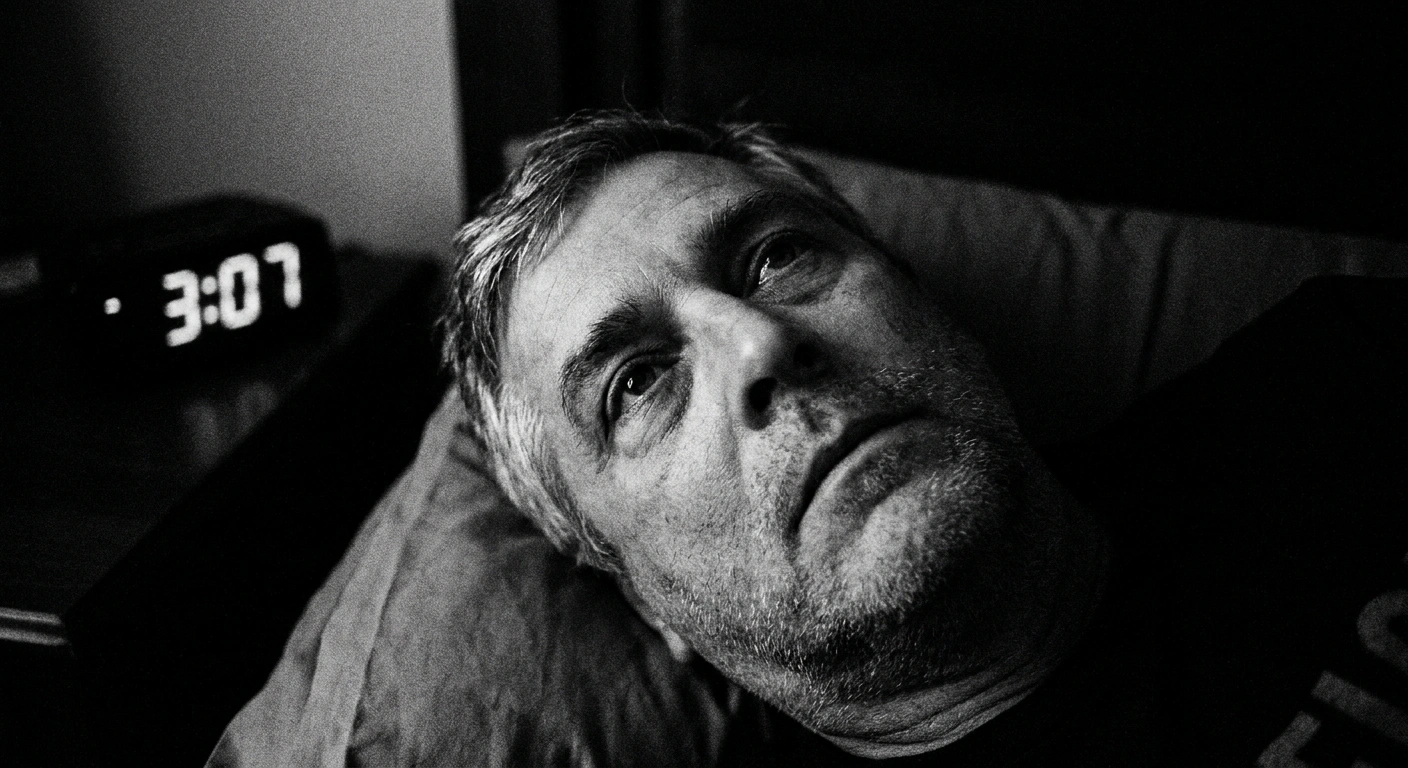
In 2011, a team at the University of Chicago published a study in JAMA that measured what happens to testosterone when healthy men sleep five hours a night for one week. The answer: daytime testosterone levels fell 10–15%. The researchers described the magnitude as equivalent to aging 10–15 years. The men in the study were 24 years old. Every man over 40 reading that number should feel it land.
Key Takeaways
- One week of 5-hour sleep restriction lowered daytime testosterone by 10–15% in healthy men (JAMA 2011, van Cauter et al.)
- 60–70% of daily testosterone production occurs during sleep — concentrated in REM and slow-wave phases
- The relationship between sleep and testosterone is U-shaped: both under 7 hours and over 9 hours associate with lower T than the 7–8 hour sweet spot (Andrology 2024)
- Sleep apnea — common in men over 40 — suppresses testosterone by 10–25% and is highly treatable
- Consistent sleep schedule matters as much as duration: irregular sleep timing disrupts the LH pulses that drive testosterone synthesis
Research Calculator · JAMA 2011 · Andrology 2024
Sleep & Testosterone Impact Calculator
Enter your average nightly sleep. The calculator maps your sleep duration to a testosterone impact zone based on van Cauter et al. (JAMA 2011) — which found a 10–15% testosterone drop after one week of 5-hour sleep restriction — and the U-shaped relationship identified in the Andrology 2024 literature.
Sources & citations
Leproult R, Van Cauter E. "Effect of 1 Week of Sleep Restriction on Testosterone Levels in Young Healthy Men." JAMA. 2011;305(21):2173-74. DOI: 10.1001/jama.2011.710. Tajar A, et al. "Sleep duration and testosterone in aging men." Andrology. 2024.
In this article: What your result means · The JAMA 2011 study · Why sleep builds testosterone · The U-shaped curve · Sleep apnea and testosterone · How to fix your sleep for T · FAQ
What Your Result Means
Severe Deficit (Under 5 Hours)
The JAMA 2011 study measured exactly this zone: five hours of sleep per night for seven consecutive days, in men with no pre-existing health conditions, produced a 10–15% testosterone reduction. That is not an estimated or extrapolated number — it is a directly observed outcome in a controlled laboratory setting.
To put 10–15% in clinical context: the normal age-related testosterone decline in men runs roughly 1–2% per year after age 30. A single week of severe sleep restriction can produce a hormonal drop equivalent to 10–15 years of biological aging. The study did not track what happens to testosterone across months or years of chronic sleep restriction at this level, but the acute data alone is sufficient to treat under-5-hour sleep as a genuine health problem, not a productivity trade-off.
High Risk (5–6 Hours)
This range captures the large category of men who describe themselves as "fine on six hours." The Andrology 2024 literature does not support that self-assessment hormonally. Men sleeping in this window show consistently lower testosterone than men sleeping 7–8 hours in epidemiological data, with the gradient steepening toward the five-hour floor.
Chronic partial sleep deprivation at 5–6 hours is particularly insidious because the subjective feeling of impairment adapts over time — men feel less tired than they actually are — while the physiological impact on testosterone, cortisol, and metabolic function does not adapt. The body does not get used to sleeping six hours; it compensates cognitively while continuing to pay a hormonal price.
Moderate Risk (6–7 Hours)
Six to seven hours represents a common landing point for working men over 40 who are managing family, career, and training. The testosterone impact at this level is real but partial — enough to influence energy, libido, and recovery if you are tracking them, but not the steep suppression of severe restriction. The practical goal is closing the gap to seven hours, which for most men requires moving the bedtime 30–45 minutes earlier rather than any structural change to their schedule.
Optimal Range (7–9 Hours)
Seven to nine hours is where the research consistently places the testosterone-supporting sweet spot. At this duration, the body cycles through four to five complete sleep cycles, accumulating 90–120 minutes of REM sleep — the phase most tightly coupled to testosterone secretion — and multiple episodes of deep slow-wave sleep, where growth hormone co-secretion supports protein synthesis and cellular recovery.
Men in this range are not just supporting their testosterone. They are also getting the sleep-dependent benefits for insulin sensitivity, cortisol regulation, cognitive performance, and cardiovascular recovery that research has repeatedly linked to this duration. Sleep at 7–9 hours is not one input among many. It is the infrastructure on which training adaptation, dietary choices, and supplementation either work or fail.
Oversleep Risk (9+ Hours)
The U-shaped relationship in the Andrology 2024 literature means that sleeping significantly beyond the optimal range carries its own testosterone risk — not through the same mechanism as sleep deprivation, but through different pathways including circadian disruption and the signaling effects of whatever underlying condition is causing the extended sleep need.
Men who consistently need 10+ hours to feel rested are rarely producing too much sleep; they are producing poor-quality sleep in large quantities, or sleeping in compensation for unresolved metabolic issues. Obstructive sleep apnea, hypothyroidism, depression, and anemia all produce hypersomnia and independently suppress testosterone. The sleep duration is a symptom, not the cause.
The JAMA 2011 Study
Van Cauter et al. recruited 10 healthy young men (mean age 24.3 years) with no history of sleep disorders, psychiatric conditions, or hormonal abnormalities. The study controlled their sleep duration using laboratory polysomnography: first a recovery period of 10 hours to establish a baseline, then 11 nights of sleep restricted to five hours.
Testosterone was measured through blood draws at 15-minute intervals across several time points during the day. The primary finding: daytime testosterone levels fell 10–15% within one week of sleep restriction. The decrease was measurable within two to three days and reached its nadir by the end of the restriction period.
The researchers noted that the magnitude of the testosterone drop was comparable to what would be expected from 10–15 years of natural aging in men — a comparison made possible because the cohort's baseline testosterone levels allowed for comparison against published age-stratified normative data. This framing gave the finding its clinical weight: sleep restriction in a week produces what aging takes a decade to produce.
What the Study Does Not Prove
The JAMA 2011 study used young, healthy men (mean age 24). The direct applicability to men over 40 requires inference, though the physiological mechanisms — testosterone synthesis concentrated in sleep, cortisol elevation with sleep restriction, LH suppression under stress — are not age-dependent. The study also measured acute effects over one week. Long-term chronic data showing what happens to testosterone across months or years of five-hour sleep is not available with the same rigor, though epidemiological cross-sectional data consistently shows the inverse relationship between short sleep duration and testosterone levels in middle-aged men.
The study did not test partial restriction at 6 or 6.5 hours, which means the 6–7 hour zone estimates in this calculator involve extrapolation from the direct findings at five hours. Those estimates are informed by the physiological gradient but are not direct measurements.
Why Sleep Builds Testosterone
The connection between sleep and testosterone is not metaphorical. Approximately 60–70% of daily testosterone production occurs during sleep. The mechanism runs through the pituitary and hypothalamus: during slow-wave and REM sleep, the brain releases luteinizing hormone (LH) in pulses that directly stimulate testicular Leydig cells to produce testosterone. This pulsatile LH secretion is tightly coupled to sleep architecture. Disrupt the sleep, and you disrupt the hormonal pulses.
Three specific mechanisms drive the sleep-testosterone relationship:
REM sleep and testosterone peaks. Testosterone rises steeply during REM sleep and reaches its daily peak shortly after waking. This is why serum testosterone is measured at 7–9 AM clinically — that morning peak is largest when sleep has been adequate and largely eliminated when sleep has been restricted. Multiple nights of poor sleep progressively flatten this morning peak.
Slow-wave sleep and growth hormone co-secretion. The early portion of sleep — the first two to three sleep cycles — contains the highest concentration of slow-wave (deep) sleep. This phase is when growth hormone is secreted in its largest daily pulse. Growth hormone and testosterone are not independent; they interact in anabolic signaling cascades that drive muscle protein synthesis, fat oxidation, and tissue repair. Truncating total sleep disproportionately cuts the slow-wave sleep in the later cycles, reducing both GH and the downstream anabolic environment.
Cortisol suppression during sleep. Cortisol follows a diurnal curve: it falls during the early evening, reaches its nadir around midnight, then rises steeply before waking (the cortisol awakening response). Insufficient sleep elevates cortisol during the window when it should be lowest. Cortisol directly suppresses testosterone synthesis at the Leydig cell level and competes with testosterone at androgen receptors. One night of poor sleep measurably elevates next-day cortisol and depresses the testosterone-to-cortisol ratio — the key hormonal balance marker for training adaptation and recovery.
The U-Shaped Curve
Most men understand that poor sleep lowers testosterone. Fewer understand that excess sleep does too — which is why the U-shaped relationship identified in the Andrology 2024 literature matters.
Men sleeping 9–10 hours consistently show lower testosterone than men sleeping 7–8 hours in cross-sectional epidemiological data. The mechanism differs from sleep deprivation: chronically sleeping more than the body's physiological need disrupts the circadian rhythm. Circadian timing governs the pulsatile LH release that drives testosterone production. When sleep timing becomes irregular or dramatically excessive, the hormonal pulses that depend on predictable circadian cues are blunted.
The more clinically important point is that chronic oversleeping usually signals an underlying condition rather than a genuine sleep requirement. Sleep apnea, in particular, produces high apparent sleep duration (men spend 9–10 hours in bed trying to get enough rest) alongside severely fragmented sleep architecture. The result is long sleep time combined with poor sleep quality — the worst of both curves. Treating the underlying apnea typically normalizes both sleep duration and testosterone levels.
Sleep Apnea and Testosterone
Obstructive sleep apnea (OSA) deserves specific attention in any discussion of sleep and testosterone in men over 40. Prevalence estimates suggest that 15–30% of middle-aged men have clinically significant OSA, and most are undiagnosed. The condition involves repeated partial or complete airway obstruction during sleep, which fragments sleep architecture and produces repeated hypoxic episodes.
OSA suppresses testosterone through two distinct pathways: the direct hormonal effect of sleep fragmentation (interrupted REM and slow-wave sleep eliminates the testosterone-producing sleep phases) and the effect of intermittent hypoxia on Leydig cell function. Studies comparing testosterone levels in men with and without OSA consistently find 10–25% lower testosterone in OSA-affected men, with the severity of the deficit correlating with apnea severity.
The treatment data is clinically significant: CPAP therapy (continuous positive airway pressure) in men with severe OSA produces average testosterone increases of 20–25% across multiple studies. This is a larger hormonal intervention than most testosterone-supporting supplements, produced not by adding anything but by removing an interference.
Men over 40 who sleep adequately by duration but wake unrefreshed, snore loudly, have a partner who notices breathing pauses, or feel afternoon fatigue despite seven or eight hours of sleep should request a sleep study. The American Academy of Sleep Medicine estimates that 80% of moderate-to-severe OSA in adults goes undiagnosed. The hormonal stakes are measurable.
How to Fix Your Sleep for Testosterone
For men whose calculator result falls outside the optimal range, these are the evidence-based changes with the clearest testosterone-relevant mechanisms:
Anchor your wake time. Sleep timing regularity matters alongside duration. The LH pulses that drive testosterone production are circadian — they depend on a consistent biological clock. Sleeping and waking at variable times across the week — a common pattern in men who stay up late on weekends and try to compensate with late sleep — disrupts circadian testosterone signaling even when total sleep hours are adequate. Fix your wake time first. Consistent wake time anchors the circadian rhythm faster than any other intervention.
Target 7–8 hours by moving bedtime, not wake time. Most men will not change their work schedule to sleep later. The practical approach is moving bedtime earlier by 15–30 minutes every few days until reaching a sleep duration that consistently produces a rested morning. Attempting to add 90 minutes of sleep in one night typically fails because the body's sleep pressure has already adapted to the shorter duration.
Eliminate alcohol within 3 hours of sleep. Alcohol suppresses REM sleep specifically — the highest-testosterone sleep phase. A single evening drink consumed close to bedtime measurably reduces REM duration and elevates cortisol during sleep. Men who drink socially a few evenings per week are trading sleep quality and REM testosterone production for the alcohol. This is not a judgment; it is a mechanism worth understanding when making that trade.
Remove blue light 60–90 minutes before bed. Blue-wavelength light suppresses melatonin secretion from the pineal gland, delaying sleep onset by 20–40 minutes in controlled studies. Melatonin does not directly produce testosterone, but it governs the circadian timing of sleep onset that makes the downstream hormonal processes possible. Screen elimination before bed — or use of amber-tinted glasses — is among the most accessible and lowest-cost sleep interventions available.
Check for sleep apnea if sleep does not restore. If you are sleeping 7–8 hours, maintaining a consistent schedule, and still waking unrefreshed with low energy and morning testosterone symptoms — low libido, poor erections, slow recovery from training — pursue a sleep study. Home sleep apnea tests are available by prescription from a primary care physician and require only one night. The condition is common, treatable, and the testosterone consequences of untreated OSA are clinically significant.
Support sleep with magnesium glycinate. Magnesium plays a regulatory role in GABA signaling, which supports sleep onset and maintenance. A 2024 meta-analysis in Sleep Medicine Reviews found that magnesium supplementation improved sleep quality (sleep onset latency, total sleep time, and sleep efficiency) in middle-aged adults with sleep complaints. The testosterone-supporting form is magnesium glycinate at 200–400 mg before bed. Magnesium citrate works similarly but has a higher rate of GI side effects at therapeutic doses. See our detailed magnesium guide for men for dosing specifics. The NIH Office of Dietary Supplements summarizes the clinical evidence base.
Other Factors That Stack With Sleep
Sleep does not operate in hormonal isolation. Several lifestyle factors interact with sleep quality and duration to amplify or undermine testosterone production:
Training timing and testosterone. Resistance training produces an acute testosterone spike lasting 15–30 minutes post-exercise. This spike is blunted in sleep-deprived men — the hormonal substrate for the response is diminished. Men who train consistently but sleep poorly are leaving training-induced testosterone adaptations on the table. Aerobic training, particularly Zone 2 cardio, also supports testosterone indirectly through its effects on insulin sensitivity and cortisol regulation. Our Zone 2 cardio for longevity guide covers the practical protocol.
Zinc and testosterone synthesis. Zinc is a rate-limiting cofactor in testosterone synthesis. Deficiency — common in men who sweat heavily during training without dietary replacement — directly impairs Leydig cell function. Oysters, red meat, pumpkin seeds, and supplemental zinc (15–30 mg elemental) support baseline testosterone production. Zinc does not replace sleep, but deficiency undermines whatever sleep-driven testosterone production the body is attempting. See our supplement stack for men over 40 for how zinc fits into a broader protocol.
Stress and cortisol load. Chronic psychological stress elevates cortisol across the day, which suppresses the evening cortisol nadir and makes it harder to transition into deep sleep. The result is a feedback loop: stress degrades sleep, degraded sleep elevates cortisol, elevated cortisol suppresses testosterone. Stress management interventions — meditation, structured breathing protocols, workload management — support testosterone indirectly by protecting the hormonal environment that sleep requires.
Morning testosterone testing protocol. If you want to measure whether your sleep changes are producing measurable hormonal improvement, get your testosterone tested at 7–9 AM after two consecutive nights of adequate sleep. Testosterone measured in the afternoon or after a poor night is unreliable — it will underestimate your actual hormonal status. For a complete guide to testosterone testing, see how to get your testosterone levels checked.
FAQ
How much does one bad night of sleep lower testosterone?
A single night of four to five hours of sleep measurably reduces testosterone in the next-day morning peak. Studies measuring testosterone after acute sleep restriction find 10–20% reductions in the morning peak following one night at four hours of sleep. The body partially recovers with subsequent normal nights, but persistent recovery to baseline requires multiple nights of adequate sleep. The JAMA 2011 study showed measurable suppression within two to three days of five-hour sleep, suggesting that even a long weekend of poor sleep has a detectable hormonal impact.
Does napping compensate for lost nighttime sleep?
Partially, but not equivalently. Naps can reduce the subjective sleepiness and cognitive impairment from sleep restriction. They cannot fully replicate the hormonal benefit of nighttime sleep because the circadian-driven LH pulses that produce testosterone are specifically timed to nocturnal sleep. Daytime sleep does not trigger the same hormonal architecture. A nap is better than nothing for recovery, but it does not replace the testosterone-producing function of a full night.
Can low testosterone cause poor sleep?
Yes — and this creates a bidirectional feedback loop that is clinically important. Low testosterone in men is associated with reduced sleep quality, more fragmented sleep, and reduced REM and slow-wave sleep duration. Sleep deprivation causes low testosterone. Low testosterone degrades sleep quality. Men with both conditions may be caught in a cycle that is difficult to escape without addressing both simultaneously. If you suspect clinically low testosterone, see signs of low testosterone in men over 40 for a full symptom assessment.
Does sleep quality matter more than sleep quantity?
Both matter, but quality affects quantity in a specific way: poor sleep quality makes men feel they need more hours to feel rested, driving the upper end of the U-shaped curve. Six hours of consolidated, uninterrupted sleep with full sleep cycles delivers better testosterone outcomes than eight hours of fragmented sleep with frequent arousals. Men with untreated sleep apnea exemplify this: nine hours in bed, fragmented architecture, low testosterone. The priority is achieving both adequate duration and adequate quality — the two are not substitutes.
At what age does sleep's effect on testosterone become most pronounced?
The acute hormonal effect — testosterone dropping with sleep restriction — is present across all adult ages, as the JAMA 2011 study demonstrated in young men. However, the net hormonal impact may be greater in men over 40 because baseline testosterone is already on a gradual decline (1–2% per year), leaving less reserve. A 10–15% drop that is easily compensated in a 25-year-old with high baseline testosterone becomes clinically significant in a 47-year-old already in the lower normal range. The calculator provides the same zone guidance regardless of age; age determines how much the result matters clinically.
Is there a supplement that can offset sleep's testosterone effect?
No supplement fully compensates for inadequate sleep, but several support the hormonal environment that sleep produces. Ashwagandha (600 mg KSM-66 daily) reduces cortisol and has produced modest testosterone increases in randomized trials — see our ashwagandha for men guide for the dosing evidence. Zinc glycinate (15–30 mg) supports testosterone synthesis. Magnesium glycinate improves sleep quality which supports testosterone indirectly. None of these replace sleep. They are adjuncts to, not substitutes for, seven to eight hours of quality sleep. For a full evidence-based review of what is worth taking, see do testosterone boosters actually work.
Consult your healthcare provider before making significant changes to your sleep routine or beginning any supplementation program. This article is for educational purposes only and does not constitute medical advice.
References
The sources this article links to, in the order they appear.
Keep reading
More from Health for men over 40.
Medical Disclaimer: This article is for informational purposes only and does not constitute medical advice. Always consult your healthcare provider before starting any new exercise, nutrition, or supplement program. Written and reviewed by The PrimeVital Desk.