Educational information, not medical advice. Drafted with AI from the sources cited and reviewed before publishing. How we work.
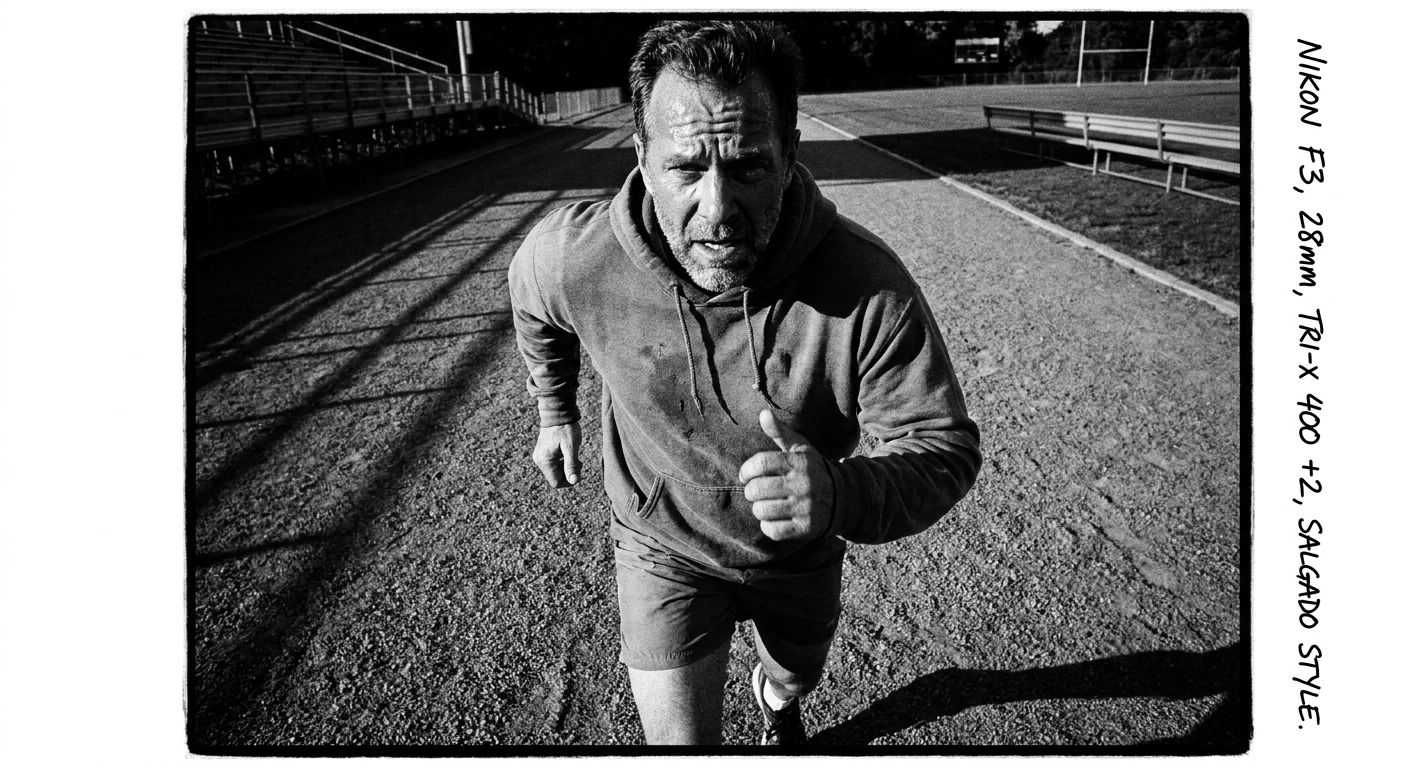
A 2022 study published in the Journal of the American College of Cardiology tracked the cardiorespiratory fitness levels and long-term mortality of 750,000+ men across more than a decade. The key finding: each 1-MET increase in fitness reduces all-cause mortality risk by approximately 13%. Losing more than 2 METs of fitness raises that risk by 74%. Low cardiorespiratory fitness predicted mortality more reliably than smoking, hypertension, or type 2 diabetes. The calculator below applies those numbers to your VO2 max.
Key Takeaways
- Each 1-MET increase in VO2 max cuts all-cause mortality risk by ~13% (JACC 2022, 750,000+ men)
- Losing more than 2 METs — common after sustained inactivity — raises risk by 74%
- Men in the low fitness zone face roughly 2x the all-cause mortality of men in the moderate zone
- A structured 12-week aerobic training program produces 1.5–3.0 MET gains in most sedentary men
- VO2 max tracks with METs: divide your VO2 max by 3.5 to get your MET level
- You do not need a lab test — the Cooper 12-minute run gives a validated estimate
Research Calculator · JACC 2022 · 750,000+ Men
VO2 Max Mortality Risk Calculator
Enter your VO2 max directly or estimate it from a Cooper 12-minute run. The calculator maps your fitness to a mortality risk zone based on a JACC 2022 study of 750,000+ men — where each 1-MET increase in cardiorespiratory fitness was associated with a 13% lower risk of all-cause mortality.
Most smartwatches (Garmin, Apple Watch, Polar) report VO2 max on their fitness dashboards. Lab-tested values are most accurate; wearable estimates vary by ±10%.
Sources & citations
Lima R, et al. "Cardiorespiratory Fitness and All-Cause Mortality: Dose-Response Association." JACC. 2022;80(11):1056-1067. DOI: 10.1016/j.jacc.2022.06.030 (750,000+ men). Cooper KH. "A Means of Assessing Maximal Oxygen Intake." JAMA. 1968;203(3):201-204.
In this article: What your result means · The JACC 2022 study · How to measure VO2 max · How to raise your score · FAQ
What Your Result Means
Low Fitness Zone (under 6 METs / under 21 ml/kg/min)
Men in the low fitness zone face the highest mortality risk in the JACC 2022 dataset. Compared to men in the moderate fitness zone, the relative mortality risk at this level roughly doubles. The mechanism is not mysterious: cardiovascular function, metabolic regulation, inflammatory signaling, and cellular stress responses all track with cardiorespiratory fitness. Men with VO2 max below 21 ml/kg/min have limited cardiovascular reserve — the heart cannot efficiently meet elevated demands, and chronic low-grade cardiovascular stress accumulates over years.
The practical implication is stark. At this level, each 1 MET gained carries the largest absolute risk reduction in the entire fitness spectrum. Moving from 5.0 to 6.0 METs produces a bigger relative mortality benefit than moving from 10.0 to 11.0 METs, because the dose-response curve is steepest at the low end. This is where training investment has its highest return.
Below Average (6.0–8.9 METs / 21–31 ml/kg/min)
This zone captures the majority of sedentary to lightly active men over 40. Each MET still represents a 13% mortality risk reduction based on the study's dose-response data, and the gap to the moderate fitness threshold — 9 METs — is achievable within a single training block. Men in this zone are not at the extreme, but they are below the level where the protective mechanisms of aerobic fitness fully engage.
A common scenario in this range: men who were moderately fit in their 30s and gradually lost fitness through career demands, reduced training, and age-related decline. Fitness at 40 is never a fixed number. The 13% per MET figure applies at every point in the curve, which means the direction of travel matters as much as the absolute number.
Moderate Fitness (9.0–10.9 METs / 31.5–38 ml/kg/min)
The moderate zone is the first tier where the data shows clear, substantial mortality protection. Men here have roughly half the all-cause mortality of men in the low fitness zone. Exercise physiologists generally define this level as the minimum "protective threshold" — below it, cardiovascular risk is substantially elevated; above it, the protective mechanisms of aerobic fitness are meaningfully engaged.
Men in this zone can sustain moderate aerobic exercise for 30–45 minutes without stopping. They can run a mile in under 10 minutes, or cycle 10 miles in 45 minutes. The relevant goal from here is to push toward the high fitness zone, where the additional risk reduction remains meaningful but requires progressively more training investment per MET gained.
High Fitness (11.0–12.9 METs / 38.5–45 ml/kg/min)
The JACC 2022 data shows men in the high fitness zone with approximately 60% lower all-cause mortality compared to the low fitness reference. This level requires consistent structured training over months and years — it does not happen by accident. Men who reach and maintain this fitness level through their 40s and 50s appear in multiple large cohort studies as the strongest candidates for extended healthspan.
Peter Attia, the longevity physician and author of Outlive, uses VO2 max as his primary objective marker for assessing patients' long-term prognosis — specifically whether patients can stay in the high-to-elite zone through their 70s and 80s by working backward from those targets in middle age. The strategy: build enough aerobic capacity now that natural age-related decline over 30–40 years still leaves you above the protective threshold.
Elite Fitness (13+ METs / 45.5+ ml/kg/min)
Elite fitness — VO2 max above 45.5 ml/kg/min — represents the top 5–10% of middle-aged men and the lowest-risk tier in the JACC 2022 dataset. Men at this level run 5K under 20 minutes or cycle 20 miles in under an hour. The mortality reduction compared to the moderate zone is roughly 35–40%, and compared to the low fitness zone, the gap approaches 70%.
Reaching and maintaining elite fitness is not a realistic near-term goal for most men entering midlife from a sedentary baseline. It becomes relevant as a multi-year target — something to work toward systematically rather than sprint toward. The more pressing question for men in this zone is durability: can you protect this fitness level across the next decade?
The JACC 2022 Study
The study tracked cardiorespiratory fitness (measured as peak exercise capacity in METs during treadmill or cycle ergometer testing) for more than 750,000 men over follow-up periods averaging 8–10 years. This is among the largest fitness-mortality datasets ever assembled. The cohort included men across the full adult age range, with a median age in the late 40s to early 50s at baseline assessment.
The primary outcome was all-cause mortality. The central finding — a hazard ratio of approximately 0.87 per 1-MET increase in fitness — held after statistical adjustment for age, BMI, blood pressure, blood glucose, lipids, smoking status, and baseline cardiovascular disease. This means fitness carried mortality-predictive information independent of the traditional risk factors that most clinical medicine focuses on.
The "losing 2 METs raises risk 74%" finding deserves specific attention. This was measured in men who completed two fitness assessments separated by several years, allowing the researchers to track fitness change over time. Men who lost more than 2 METs of fitness between assessments — regardless of their starting fitness level — had 74% higher all-cause mortality compared to men who maintained their fitness level. This is not a comparison between fit and unfit men. It is a comparison between men who maintained their fitness and men who lost it.
The practical implication: maintenance matters as much as peak level. A man at 10 METs who drops to 7.5 METs faces nearly the same relative increase in mortality risk as a man who starts the study at 7.5 METs. Fitness lost is not a safe level held at a lower number — it is a genuine risk increase.
What the Study Does Not Prove
The JACC 2022 data is observational. It cannot prove that raising your VO2 max directly extends your life — only that fitness and mortality are strongly correlated in a large population. Confounders exist: men with higher fitness may have other protective behaviors the study could not fully capture (diet quality, social connection, sleep). The study adjusts for the major clinical risk factors, but residual confounding cannot be eliminated.
The dose-response relationship between fitness and mortality is consistent across multiple large observational studies spanning different populations, countries, and decades. Randomized controlled trials on fitness and mortality are logistically impossible (you cannot randomize half a cohort to lifelong inactivity). The scientific consensus treats the correlation as causal, but the evidence hierarchy is necessarily observational for this outcome.
How to Measure Your VO2 Max
Lab-Based Testing
A metabolic exercise test (often called a VO2 max test or cardiopulmonary exercise test) is the gold standard. You exercise on a treadmill or bike at progressively increasing intensity until exhaustion while wearing a mask that measures oxygen consumption and carbon dioxide output. Peak oxygen consumption at maximal effort is your VO2 max. Most sports medicine clinics and cardiac rehabilitation centers can run this test; it takes 8–12 minutes of active exercise and costs $150–$350.
Lab testing is worth the investment if you have a history of cardiovascular disease, are over 60 and haven't exercised in years, or want a precise baseline for structured training.
Smartwatch Estimates
Garmin, Apple Watch (Series 4 and later), Polar, and COROS all report VO2 max estimates based on heart rate data during runs or steady-state cardio. The algorithms vary in accuracy, but studies comparing wearable estimates to lab-measured VO2 max typically find accuracy within ±10% for dedicated running watches. Apple Watch and Garmin have been validated in independent studies at approximately ±3.5–5 ml/kg/min for most users.
For tracking trends — whether your fitness is improving or declining — wearable estimates are reliable enough. For a single-point comparison against mortality risk zones, they provide useful ballpark data while acknowledging the margin of error.
Cooper 12-Minute Run Test
The Cooper test is a practical field test requiring only a flat running surface and a timer. Developed by Dr. Kenneth Cooper for US Air Force fitness testing in 1968, the formula — VO2 max = (distance in meters − 504.9) ÷ 44.73 — has been validated against lab testing in multiple independent studies.
How to run it: warm up for 5–10 minutes, then run as far as possible at maximum sustainable effort for exactly 12 minutes. Record the total distance. On a standard 400m track, count your laps and multiply. The formula is built into the calculator above.
Important: the Cooper test requires running at near-maximal effort. Men over 40 who have been sedentary should complete a medical evaluation before attempting it. A treadmill ramp test or submaximal step test is a safer entry point for deconditioned men.
How to Raise Your VO2 Max
VO2 max responds to training at any age. Studies in men in their 50s and 60s show 10–20% VO2 max improvements within 12–16 weeks of structured aerobic training. The ceiling is lower than it was at 25, but the gap between your current level and your potential is nearly always wider than it feels.
Zone 2 Training: The Foundation
Zone 2 cardio — aerobic work at 60–70% of max heart rate, where you can sustain a conversation but breathing is clearly elevated — is the primary driver of VO2 max improvements in middle-aged men. This is not leisurely walking; it is continuous, sustained aerobic effort maintained for 30–60 minutes per session. The zone 2 cardio benefits for longevity research shows this training modality improves mitochondrial density, stroke volume, and fat oxidation — the physiological substrate of a higher VO2 max.
Target: 150–180 minutes per week of Zone 2 work. Three 50-minute sessions or four 40-minute sessions. Running, cycling, rowing, and swimming all work equally well if maintained at the right intensity.
4×4 Interval Training: The Accelerant
If you already train consistently at Zone 2 and want to push into higher fitness tiers, 4×4 interval training is the most consistently effective protocol in the literature for VO2 max improvement in men over 40.
The protocol: 4 intervals of 4 minutes each at 85–90% of max heart rate, with 3 minutes of active recovery between intervals. Run twice per week alongside your Zone 2 base work. A 2008 Norwegian RCT published in Circulation — still one of the most cited exercise intervention studies — found that 4×4 HIIT produced significantly greater VO2 max improvements than continuous moderate-intensity training in men with metabolic risk factors. The protocol has since been replicated in multiple trials.
For men with cardiovascular history, HIIT training for men over 40 carries risks that require medical clearance. Zone 2 training alone will still produce meaningful VO2 max improvements with lower cardiovascular stress during workouts.
Protecting What You Build
The JACC 2022 data on fitness loss — 74% higher mortality for losing 2+ METs — makes fitness maintenance as important as fitness acquisition. Extended breaks from training cause measurable VO2 max decline. A two-week detraining period produces roughly 3–5% VO2 max loss. Six weeks of complete inactivity can cut VO2 max by 15–20%.
The practical strategy: keep training frequency above zero during busy periods. Even two 30-minute Zone 2 sessions per week maintains most of the aerobic adaptation built during higher-volume blocks. Your resting heart rate and HRV will both track your fitness changes over weeks and months, providing ongoing feedback without retesting VO2 max directly.
Complementary Markers
VO2 max does not operate in isolation. Muscle mass, metabolic health, and sleep quality all interact with cardiorespiratory fitness in determining longevity outcomes. Men focused on maximizing their fitness trajectory should track biological age alongside VO2 max — the PhenoAge calculator uses nine blood biomarkers to estimate biological age independently of fitness, providing a cross-check against fitness-only metrics.
FAQ
What is a good VO2 max for a 45-year-old man?
A moderate fitness level for a man aged 40–50 starts at 31.5 ml/kg/min (9 METs), with high fitness beginning at 38.5 ml/kg/min (11 METs). The JACC 2022 data shows the moderate zone provides roughly 50% lower all-cause mortality versus low fitness. For a 45-year-old man who trains 3–4 days per week, a VO2 max of 38–45 ml/kg/min is achievable and represents meaningful mortality risk reduction relative to a sedentary baseline.
How accurate are smartwatch VO2 max estimates?
Independent validation studies place dedicated running watches (Garmin, Polar) within approximately ±3.5–5 ml/kg/min of lab-measured VO2 max for most users. Apple Watch accuracy is comparable for users who run regularly. These margins are meaningful at the boundaries between fitness zones. If your smartwatch reading puts you near the boundary between below-average and moderate fitness, a Cooper test or lab test will give you higher confidence. For tracking trends over months, wearable estimates are reliable.
Can you improve VO2 max after 50?
Yes. Multiple randomized controlled trials demonstrate VO2 max improvements of 10–20% in men aged 50–65 after 12–16 weeks of structured training. The absolute ceiling is lower than at younger ages due to age-related declines in maximum heart rate and muscle fiber composition, but the relative improvement potential — the gap between current level and trained potential — remains substantial in most middle-aged men. The JACC 2022 data does not show an age-based cutoff for the mortality benefit of fitness improvement.
What is the difference between VO2 max and METs?
METs (metabolic equivalents) measure energy expenditure relative to a seated resting state. One MET equals approximately 3.5 ml/kg/min of oxygen consumption. VO2 max and METs measure the same underlying capacity — peak aerobic ability — in different units. Divide your VO2 max by 3.5 to convert to METs. A VO2 max of 35 ml/kg/min equals 10 METs. The JACC 2022 study reports results in METs; most lab tests report results in ml/kg/min. The calculator converts between them automatically.
Is VO2 max really a better predictor of death than smoking?
The JACC 2022 analysis — consistent with earlier large-cohort studies including the Mandsager et al. JAMA Network Open 2018 study of 122,000 patients — found that low cardiorespiratory fitness carried a higher hazard ratio for all-cause mortality than smoking when both factors were entered into the same statistical model. This is not an argument that smoking is safe. It is an argument that fitness is underweighted in standard cardiovascular risk assessment relative to its actual predictive power for mortality outcomes.
How often should I retest VO2 max?
A Cooper test or VO2 max lab test every 12 months provides a meaningful longitudinal picture. The JACC 2022 fitness-change data — showing 74% higher mortality risk for losing 2+ METs — suggests that monitoring trends matters as much as absolute values. If you track VO2 max via a wearable, check it monthly and look for directional changes over 3–6 month windows. Single-point readings fluctuate; multi-month trends are more informative.
What does losing 2 METs actually look like in practice?
Two METs equals 7.0 ml/kg/min in VO2 max. A man who drops from 38 ml/kg/min to 31 ml/kg/min after an extended period of inactivity — roughly six months of sedentary behavior following a lifestyle disruption like a job change, injury, or illness — has crossed the 2-MET threshold. This corresponds to moving from the high fitness zone to the bottom of the moderate fitness zone. The JACC 2022 74% risk elevation finding makes this type of sustained deconditioning one of the more significant modifiable mortality risk factors for middle-aged men.
This calculator uses JACC 2022 published data and the Cooper (1968) VO2 max estimation formula for educational purposes only. It is not a medical diagnosis and does not replace a clinical exercise assessment. Consult your healthcare provider before starting a new exercise program, particularly if you have existing cardiovascular risk factors.
Keep reading
More from Longevity for men over 40.
Medical Disclaimer: This article is for informational purposes only and does not constitute medical advice. Always consult your healthcare provider before starting any new exercise, nutrition, or supplement program. Written and reviewed by The PrimeVital Desk.