Educational information, not medical advice. Drafted with AI from the sources cited and reviewed before publishing. How we work.
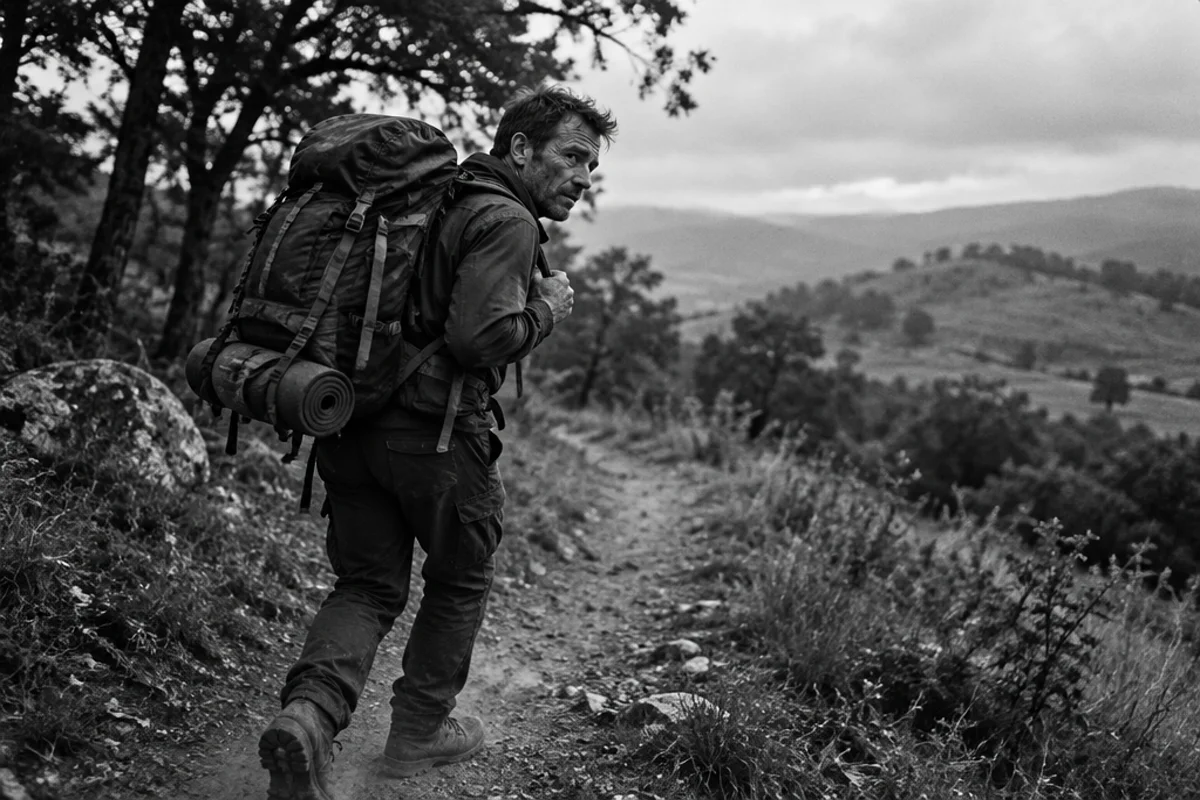
The US Army Research Institute of Environmental Medicine published the Pandolf equation in 1977 — a formula that predicts energy expenditure during load carriage from four inputs: body weight, load weight, speed, and terrain. The finding that made it durable: adding load to a walk is not simply walking harder. A 185-lb man walking at 3 mph burns approximately 295 kcal/hr. Put 35 lbs on his back and that rises to about 345 kcal/hr — a 17% increase from a workout that looks, from the outside, identical to a walk. At 50 lbs and 3.5 mph the model puts him past 430 kcal/hr with no increase in ground impact. The calculator below runs your numbers. This guide is written for men over 40 who want to add rucking to their routine — whether to extend cardiovascular sessions, burn more calories than walking delivers, or replace running that the knees no longer tolerate. The article explains what the research actually supports — and where the evidence is still thin.
Key Takeaways
- The Pandolf equation (J Appl Physiol, 1977) predicts load-carriage calorie burn from body weight, ruck weight, speed, and terrain — and is still used by military fitness programs globally
- Adding 20–30% of body weight to a walk increases calorie burn by roughly 15–25% at the same pace; adding 30–40% raises it by 25–40%
- Rucking at 3–3.5 mph with moderate load (25–35 lbs) places most men over 40 in the zone 2 aerobic range — the intensity most supported by cardiovascular outcome research
- A 2025 Wake Forest randomized trial found that more active stepping while wearing a weighted vest produced positive changes in hip bone mineral density; passive wearing did not
- The Pandolf equation under-predicts actual calorie burn by an estimated 12–33%, so treat calculator output as a floor, not a ceiling
In this article: Calorie calculator · What your numbers mean · Cardiovascular benefit · Bone loading · Grip and posterior chain · How to start · FAQ
Rucking Calorie Calculator
Enter your body weight, ruck weight, speed, and session duration. The calculator applies the Pandolf load-carriage equation and shows your estimated calorie burn alongside a comparison to the same walk without a pack.
Rucking Calorie Calculator
Pandolf load-carriage equation · Pandolf et al., J Appl Physiol 1977
This calculator uses the Pandolf et al. (1977) load-carriage equation for educational purposes only. Not medical advice. Consult your doctor before starting a new exercise program.
What Your Numbers Mean
The Pandolf equation outputs total metabolic rate — the complete energy cost of the session, not just what exceeds rest. Most men over 40 find their rucking calorie rate falls into one of three ranges.
Below 300 kcal/hr: Light load or slow pace. This is active recovery territory. Useful for deload weeks or if you are managing joint issues, but below the threshold for meaningful cardiovascular adaptation in most men over 40. Increase speed, load, or find mild elevation.
300–420 kcal/hr: This range aligns with zone 2 aerobic intensity for most men over 40 — roughly 60–70% of maximum heart rate. The research base for zone 2 training outcomes (fat oxidation, mitochondrial density, cardiovascular adaptation) is strong. A 45–60 minute session here, three times per week, satisfies the 150 minutes of moderate aerobic activity per week that cardiovascular guidelines recommend. This is the primary rucking sweet spot.
Above 420 kcal/hr: A heavy ruck or fast pace has pushed you into zone 3 or 4. Effective for fitness, but demanding on recovery — especially for men over 40 whose recovery capacity is genuinely lower than at 25. Limit sessions at this intensity to 2x per week and allow 48 hours between them.
The equation's known limitation: it under-predicts actual calorie burn by 12–33% in real-world conditions, based on comparisons against indirect calorimetry measurements in military load carriage studies. Treat your calculator output as the lower bound of what you actually burned.
Cardiovascular Benefit: What the Research Supports
Rucking produces sustained zone 2 aerobic work at a walking pace that imposes minimal joint impact compared to running. For men over 40 who cannot run consistently due to knee, hip, or foot issues, this is the practical argument: you get an extended aerobic training stimulus without the repetitive impact that made running unsustainable.
The cardiovascular adaptation pathway is identical to other zone 2 modalities: increased mitochondrial density in slow-twitch muscle fibers, improved fat oxidation efficiency, and over time, favorable changes in resting heart rate and cardiac output. The load does not change these mechanisms — it raises the metabolic cost to reach the target heart rate zone at a lower speed.
A 55-year-old man who finds 3 mph walking puts him at 55% of maximum heart rate (below zone 2) can strap on 30 lbs and reach 65–70% without changing speed. That is the practical value of the load — it upgrades an otherwise sub-threshold walk into effective aerobic conditioning.
For a detailed look at zone 2 cardio evidence and protocols, see the zone 2 cardio guide.
| Speed (mph) | Ruck weight (lbs) | ~kcal/hr (185-lb man) | vs. no-load walk |
|---|---|---|---|
| 3.0 | 0 | ~295 | baseline |
| 3.0 | 20 | ~318 | +8% |
| 3.0 | 35 | ~345 | +17% |
| 3.0 | 50 | ~380 | +29% |
| 3.5 | 35 | ~405 | +22% vs 3.5 mph no load |
| 4.0 | 35 | ~465 | +22% vs 4.0 mph no load |
Estimates from Pandolf equation; actual calorie burn typically 12–33% higher. 185-lb body weight, flat pavement.
Bone Loading: What the Evidence Actually Shows
Mechanical stress on the skeleton is the primary driver of bone remodeling — this is not in dispute. The debate is whether walking with a weighted pack produces enough mechanical loading to meaningfully stimulate bone formation in middle-aged men.
The clearest recent data comes from the 2025 INVEST in Bone Health randomized trial at Wake Forest University, published in JAMA Internal Medicine. The 12-month trial enrolled 150 older adults with obesity (mean age 66.4 years) and compared weight loss alone versus weight loss with daily weighted vest use. The overall finding: vest use did not prevent bone loss at the hip compared to weight loss alone.
The nuance: participants who spent more time actively stepping while wearing the vest showed positive changes in hip bone mineral density. Participants who wore the vest while standing still or sitting did not. The study was not testing rucking specifically — its population was significantly older and heavier than most men who ruck — but the mechanism finding is relevant: the bone benefit from a weighted vest appears to require active locomotion, not just load.
Rucking is continuous loaded stepping for 30–60 minutes. Whether that produces clinically meaningful bone adaptation in men over 40 with normal baseline bone density has not been directly tested. The plausible mechanism exists. The direct human rucking trial data for this population does not.
Grip Endurance and Posterior Chain Loading
Rucking engages the grip differently from carrying a briefcase or typing. Holding a loaded pack's shoulder straps or carrying handles for 45–60 minutes at loaded pace produces sustained grip and forearm extensor demand — not maximum-strength loading, but extended endurance loading.
The mortality significance of grip strength is well established: the grip strength calculator covers this in detail, drawing on a Scientific Reports 2024 analysis of 80,000+ adults showing significant mortality differences per 5 kg of grip strength. Rucking does not build maximal grip the way deadlifts or farmer's carries do. What it does is accumulate grip endurance volume — a different but complementary adaptation.
The posterior chain loading during rucking follows from physics. A 35-lb pack sitting above the center of mass requires the erector spinae, thoracic extensors, and hip extensors to resist forward lean for the duration of the session. A 2024 EMG study in the International Journal of Exercise Science found loaded carries activate the multifidus and longissimus thoracis more than planks and static holds. The mechanism in rucking is the same — sustained spinal stabilizer demand under load while the body is moving.
For men over 40 with desk-heavy jobs who show erector atrophy and forward head posture, rucking addresses both the muscular deficit and the cardiovascular deficit simultaneously. That combination is the reason it has moved from military conditioning into general fitness.
How to Start Rucking: A Protocol for Men Over 40
Load selection: Start at 10–15% of your body weight. For a 185-lb man, that is 18–28 lbs. At this range, the metabolic cost increase is modest but the postural demand and joint impact give your tendons, ligaments, and thoracic extensors time to adapt before you add weight. Do not start at 30–40% body weight, regardless of how fit you are.
Duration and frequency: Begin with 30 minutes, three times per week. Increase by 5 minutes per week up to 60 minutes before adding load. After 4–6 weeks at 60 minutes with the starting weight, add 5 lbs.
Pace: 3.0–3.5 mph on flat terrain is the primary training zone. You should be able to hold a conversation but breathing should be noticeably elevated.
Pack fit: An ill-fitted pack causes neck and shoulder pain that has nothing to do with conditioning. The main load should rest between the shoulder blades and the hips — not pulling away from the back. Hip belt engagement shifts load to the hips and reduces shoulder strain.
Terrain progression:
- Weeks 1–4: Flat pavement or treadmill
- Weeks 5–8: Gentle grade (3–5%) or firm trail
- Weeks 9+: Variable terrain with occasional grades up to 10%
Recovery: Men over 40 need 48 hours between ruck sessions above 400 kcal/hr. Prioritize protein (1.6–2.2g/kg bodyweight) on recovery days. Soreness in the upper traps and thoracic erectors is normal in the first 2 weeks; persistent hip or knee pain is not. See muscle recovery tips for men over 40.
Combining with strength training: Rucking complements, not replaces, resistance training. The cardiovascular and endurance stimulus is distinct from what compound lifts produce. Schedule ruck sessions on non-lifting days, or separate from lifting by at least 6 hours. For a strength program to pair it with, see beginner strength training for men over 40.
What to Ruck With
The backpack matters more than the brand. Requirements for a starter ruck:
- Sternum strap: Prevents shoulder straps from sliding
- Hip belt: Essential above 20 lbs; shifts load to the stronger hip girdle
- Load compartment placement: Weight should sit high and close to the back, not loose in the bottom
- No external frame: Internal frame or frameless packs are more stable at typical rucking distances
Military-style rucksacks (GORUCK, 5.11) are built for this use case. Hiking packs work equally well if they fit properly. Weighted vests are an alternative for lighter loads (under 25 lbs) but reduce the cardiovascular demand from shoulder and core stabilization.
FAQ
How much weight should I carry for my first ruck?
Start with 10–15% of your body weight. For a 185-lb man, that is 18–28 lbs. This range produces a measurable calorie increase without the postural stress that heavier loads impose on an untrained thoracic spine. Increase load only after you can complete 60 minutes at the starting weight without back or shoulder discomfort.
Is rucking hard on the knees?
Rucking is lower-impact than running at every load level because cadence is walking, not running. The knee receives roughly 1–1.5x body weight per step rather than the 2–3x typical of running. The load does increase total compressive force, but the ground contact pattern remains a walking pattern. Men with existing knee arthritis should start with lighter loads (under 15 lbs) and confirm joint comfort before progressing. See low impact exercises for bad knees if knee pain is a limiting factor.
How does rucking compare to running for cardiovascular fitness?
At equivalent calorie expenditure, both stimulate similar cardiovascular adaptations. Running produces those calories in less time; rucking produces them with less joint impact. For most men over 40, the practical answer is: rucking is sustainable long-term where running often is not. A 60-minute ruck at 3.5 mph with a 35-lb pack burns roughly the same calories as a 30-minute easy run — but with a fraction of the cumulative joint loading. For men who can run without pain, running develops cardiovascular fitness faster. For men managing knee, hip, or back issues, rucking is the more realistic long-term protocol.
Can I ruck every day?
Not at moderate or high intensity. With loads above 20% body weight, daily rucking accumulates connective tissue stress faster than most men over 40 can recover from. Three to four sessions per week is the evidence-informed ceiling for sustained ruck training without breakdown. Daily light rucking (under 15% body weight at a casual pace) is unlikely to cause problems, but the conditioning benefit at that load is modest.
Does rucking build muscle?
Not in the way resistance training does. Rucking builds muscular endurance in the traps, thoracic erectors, hip extensors, and calves — it does not produce the mechanical tension needed to drive hypertrophy. For muscle mass, you need the compound lifts. See best compound exercises for men over 45. Rucking and lifting are complementary, not interchangeable.
What is a good starting rucking distance?
For men new to the activity, 2 miles (3.2 km) is a workable first session. At 3 mph, that is 40 minutes. The goal is to complete the distance without shoulder or back discomfort, not to maximize calorie output. Progress distance before load: reach 4 miles (6.4 km) at your starting weight before adding more weight.
Rucking is one of several loaded-carry modalities for men over 40. For grip-specific strength work with the highest mortality-linked outcome data, see the grip strength calculator. For the cardiovascular side, the VO2 max mortality calculator provides context on cardiorespiratory fitness and longevity. For strength training to pair with rucking, see beginner strength training for men over 40.
This article is for educational purposes only. Consult your healthcare provider before beginning a new exercise program, particularly if you have cardiovascular, joint, or bone health conditions.
Rucking's case for men over 40 is straightforward: the Pandolf equation shows the load multiplies calorie burn without multiplying joint impact. Start with 10–15% of your body weight, build to 60 minutes at 3–3.5 mph on flat terrain, and add load only once that distance is comfortable. Pair it with resistance training two or three days per week and you cover the cardiovascular and strength bases that matter most after 40. Use the VO2 max mortality calculator to track whether your cardiorespiratory fitness is moving in the right direction.
References
- Pandolf KB, Givoni B, Goldman RF. Predicting energy expenditure with loads while standing or walking very slowly. J Appl Physiol. 1977;43(4):577–81.
- Santee WR, Blanchard LA, Speckman KL, et al. The Pandolf equation under-predicts the metabolic rate of contemporary military load carriage. J Strength Cond Res. 2017. (ResearchGate DOI: 10.1519/JSC.0000000000002088)
- Nuss KJ, et al. Weighted Vest Use or Resistance Exercise to Offset Weight Loss-Associated Bone Loss in Older Adults: A Randomized Clinical Trial (INVEST in Bone Health). JAMA Intern Med. 2025. PMID 40540267. doi:10.1001/jamainternmed.2025.1877
Keep reading
More from Fitness for men over 40.
Medical Disclaimer: This article is for informational purposes only and does not constitute medical advice. Always consult your healthcare provider before starting any new exercise, nutrition, or supplement program. Written and reviewed by The PrimeVital Desk.